Important aspects sought in interior spirituality: encounters with God, personal transformation, love

I am active in prayer groups – in addition to broader church involvement – and talk to people frequently about prayer. On a related note, I wonder when I attend church services why I don’t hear more conversations in church pews about the interior aspects of how people experience their faith. Perhaps these conversations happen most often in small groups that come together for this purpose. Perhaps, too, it’s my role to cultivate such conversations (thus, this blog post as a step in that direction).

I participated in a recent discussion in which a phrase came up that is currently being used by the U.S. Conference of Catholic Bishops (USCCB) in their National Eucharistic Revival: Encountering Christ. I’ve heard folks use the word encounter before in faith settings (“an encounter with God,” marriage encounter, etc.). I am now realizing that this may be a key word that people might use if there were to be more of the conversations about how people experience faith. It seems – I haven’t quantified this in statistically validated surveys – that the main topics of interest to people regarding the interior aspects of how we experience faith (or want to experience faith) are:

Encounters with God

Any number of saints write about their encounters with God. Some everyday people talk about their encounters with God. It seems that these encounters are initiated by God. We can cultivate being welcome receivers of such encounters (deepening an active prayer life, etc.). We can also respond to the inner promptings provided occasionally by the Holy Spirit – those “emotional nudgings” that we can either respond to or ignore (some nudgings are more obvious or poignant than others). It also seems that we are more likely to notice – and engage with – these promptings if we regularly connect meaningfully with our inner lives – something not always encouraged in our outwardly-focused culture (also, some people avoid the inner life to avoid inner challenges; having inner challenges is a universally human experience) – can make it easier to notice and reply to the Holy Spirit’s “emotional nudgings” welcoming us to an encounter with God.

What are these encounters with God? While the contours of each encounter is going to be personal to us, these encounters involve us sensing God’s presence – often with God making it possible for us to be somehow transformed. These encounters can range from a one-time occurrence to an ongoing or recurring experience. I responded to such an “emotional nudging” at a church service in 2016. I had been away from church for some years and attended a special service for social reasons – with the explicit intention of “I am only coming to this service for social reasons; I am NOT returning to church.” When I arrived, the service became more socially meaningful than I anticipated and the homily (sermon) impacted me – my sense was that the priest’s faith filled in empty hole in my soul that I hadn’t been able to fill. As the evening unfolded, I then stepped off a curb wrong on my way home from the service and broke my ankle – which left me on the couch at home; I was stuck not being able to actively distract myself from the “emotional nudging” I had experienced at church. Within days, this experience brought me back to church. In an extended period that followed, I experienced daily contemplative prayer that was given to me; I felt God’s presence in that prayer. All of this led to my faith broadening in wonderful ways and my emotional life growing and maturing in positive ways.

A crucial aspect of encounters with God gets to “the heart” of a relationship with God: God is love and God loves us. It is God’s very nature to love. Given that it is God’s inherent nature to love, the Catholic Catechism speaks to God’s nature needing to be Trinitarian – Father, Son, Holy Ghost – because God needed someone to love before God had humans to love; the three aspects of the Trinity could love each aspect of itself until we humans came along….and, of course, the Trinity continues loving each aspect of itself. Paragraph 221 of the Catechism reads: “God himself is an eternal exchange of love, Father, Son, and Holy Spirit, and he has destined us to share in that exchange.”).

Personal Transformation

  • How do we mature in faith?
  • How are we maturing – or not maturing – in faith? What are the roadblocks that we encounter in this regard? How can we get around these roadblocks?
  • How can we grow through the most stubborn and challenging emotional difficulties and life challenges?

The Fruits of the Spirit – the outcomes of growing in faith – are listed in the New Testament (Galatians 5:22-23): love, joy, peace, forbearance, kindness, goodness, faithfulness, gentleness, and self-control.

Then, the most important result of growing in faith: love of God and neighbor

When Christ was asked which of the commandments was greatest, he replied that the two greatest commandments are Love God and love your neighbor (Matthew 22:36-40).

How well are we present to the people in our lives – our loved ones, friends, neighbors, co-workers, etc? How much do we attend to their daily needs? How often do we buy people flowers, send them cards, etc? Do we step up to “be there” when someone is having a difficult time? Do we listen? Loving people necessarily involves being present to them. People need each other. Being present involves focusing upon the person – taking an interest in their emotional state and interacting so they sense our interest in them (not thinking about what we’re going to interject when they are done with their next sentence!). When I stayed with a cousin following her surgery, I was moving around her house looking for physical activities to do that would be helpful (wash dishes, etc.); she finally told me, “Please stop. I just need you to be here. Come, sit with me.”

Beyond caring about the people who we are happy to have in our lives, we can’t say that we love God if we don’t love our neighbor – all of our neighbors, including strangers. Every person alive is a child of God. We are called to be good to everyone. Of course, we find that some people are easy to love, while some are harder to love. It’s easy to be nice to the people we like. We are measured, I suppose, by how well we treat the people we find hardest to get along with. Sometimes I do well in this regard, sometimes I don’t.

In today’s lonely and divisive world (us-against-them political divisions, etc.), each of us becoming more kind toward “the other side” would go along way toward improving our social divisions (it’s not just about waiting for them to “see the light” and be nice to us!)….. Loving more of the people we come into contact with – taking the time to acknowledge people – would also go along way toward reducing what the U.S. Surgeon General is calling our Epidemic of Loneliness. There’s a saying that gets posted occasionally (source unknown): Always be a little kinder than is necessary.

Kim Burkhardt blogs at A Parish Catechist and The Books of the Ages. If you are a new visitor, it would be great to have you follow this blog (thank you!). If you know someone who would like this blog post, please share it with them (thank you!

Prayer: a heart-and-soul, “all in” activity

A couple of years ago, I read a title for a social media post that stayed with me: “Worry is not a plan.” If you need to get something done or figure out how to do something, worrying about it is not “an activity or a plan that counts toward doing something.”

That statement of “worry is not a plan” is eye-catching because it is insightful about how we emotionally engage with challenging aspects of our lives.

Prayer, on the other hand, is a meaningful activity – fruitful in and of itself (and quite the opposite of worry! In prayer, we are to allow God to be in control rather than worrying that nothing positive is going to happen. Further, God has no ill intention when we give God the reigns.). It is most meaningful when we emotionally engage with prayer.

A perusal of Google Trends (a free online way to look up what people have been searching for online since 2004), indicates that people are searching more often for information about “how to pray.”

There are a good variety of “techniques” for prayer. When I teach classes for people interested in joining my denomination, one of the topics we cover is “types of prayer, ways to pray” (with an assignment to start praying if they aren’t already!) There is intercessory prayer (asking God to intercede – or help – with this or that), contemplative prayer, lectio divina, attending church services (yes, being at church is – in and of itself – prayer, “talking to God” (in a general yet personal sort of way), denomination-specific techniques such as using prayer beads (rosaries, etc.), singing (did you know that the psalms were all meant to be sung and that “everyone who sings prays twice”?) the list goes on. Some approaches to prayer will suit one person, while other forms of prayer work better for the next person. What matters most about prayer is that “we are all in” when we pray.

What’s being “all in” when we pray? It involves actually engaging. Being present. Being present to God. Prayer is communication, a two-way communication – not just us talking at God. When we phone people we know, we wouldn’t just talk at them (one-directional communication) and then hang up, without listening to them in reply; it’s the same with God when we pray – prayer is meant to be a a meaningful, two-way connection (give-and-take).

When I pray, there is rarely human language involved. Perhaps surprisingly, human language isn’t necessarily necessary to communicate within prayer. I tend only to use human language in prayer when doing intercessory prayer (a small percentage of my prayer time). Most of the time, my prayer experience involves “resting in God’s presence” (a phrase from Contemplative Outreach). In other words, “Be still and know that I am God” (Psalm 46:10). Being in God’s presence, allowing God’s presence to be within my conscious awareness, surrendering to allow God turn me into the person that God wants me to be – this for me leads me toward feeling the fullness of God’s love and toward being a better human being. Feeling God’s presence is an aspect of communication and a productive one at that (like having a loved one or a pet with you in front of a fire when you are feeling down). Feeling loved by God is a form of communication. Sensing that God is changing how I live in the world is a fruitful aspect of prayer.

Prayer in which “we are all in” is life-changing. A meaningful relationship with God is only possible with prayer. Having an active life of faith is only possible with prayer.

We each our best approach to prayer by trying out prayer. Wondering how to have a meaningful relationship with God? Pray regular – at least twice per day, five minutes each time (if that feels like a lot, there are some prayer practices that pray for 20 minutes to an hour at a time – or more). Try out the various types of prayer listed earlier in this post. There is absolutely no “right type of prayer.” There are a number of types of prayer that most certainly have time-tested value; it’s also true that we are all individuals and we all connect with God in our own way.

“How,” might you ask, “will I know when I have found an approach to prayer that works for me?” You’ll know. Prayer will become something that you won’t be able to live without – any more than you can live without air or water.

Kim Burkhardt blogs at A Parish Catechist and The Books of the Ages. If you are a new visitor to this parishcatechist.org blog, you are invited to start following this blog (thank you!)!

Surrender in Prayer

Prayer is communication, a relationship with God. A few thoughts about this prayer relationship and about our role of surrender within this prayer relationship:

Be still and know that I am God (Psalm 46:10).

Relationships are two-way, interactive.

We typically wouldn’t call someone on the phone and have a one-way communication whereby we solely speak to the other person without giving the other person an opportunity to speak, then hang up. Just as human communication is a two-way process, our prayer time with God is meant to be a two-way relationship; we communicate to God and receive God’s communication to us.

In order for us to have a two-way prayer relationship with God, we have to listen to – and be present to – God’s presence in our lives. God wants to have a relationship with us.

How do we go about listening to God’s presence in prayer? My own experience with this is reflected in both Psalm 46:10 (“Be still and know that I am God”) and Contemplative Outeach’s concept of “resting in God’s presence.” Can everyone expect to hear God’s voice in the sense of hearing human language spoken to us by God? Hearing spoken language directed to me by God isn’t something I experience. What I personally experience in prayer is feeling God’s presence; feeling loved by God, feeling that God is directing the course in which I move in life because I am allowing God to do so – this “more than suffices” in my view as two-way communication. The love found in God’s presence provides “peace that passes all understanding” (Phillipians 4:7).

It is in our surrender that we win…..

Our relationship with God is a relationship that happens only when we choose to participate in such a relationship. Again, God the creator wants to have a relationship with us. We have free will; no relationship is a true relationship when it is forced – rather, God gives us the option of whether we are willing to have God be present in our lives.

Our God-and-us relationship is one of creator-and-created, parent-and-child.

Within this creator-and-created relationship, there is a natural place for our surrender to God as our leader-who-molds-and-fashions-our-will-toward-good.

Despite our western ideas about individual autonomy and self-agency, us permitting God’s agency to mold and shape us is liberating. God loves us, wants good for us and our world, and and has capacity for transformational good beyond our comprehension. There is no room for a negative outcome when we allow God to work within and through us.

He must become greater, I must become less (John 3:30).

When we allow God to work in and through us, this leads naturally toward life becoming about God – and, by extension, us focusing on God’s other children – rather than our life being about us. We move out of the way, more of our being becomes about God’s presence within us. Rather than us being me-centered, we become God-centered. In time, this turns into “It is no longer I, but God who lives in me” (Galatians 2:20). As a result, we experience the “peace that passes all understanding” (Phillipians 4:7).

Kim Burkhardt blogs at A Parish Catechist and The Books of the Ages. If you are a new visitor, you are invited to click through and start following this blog (thank you!).

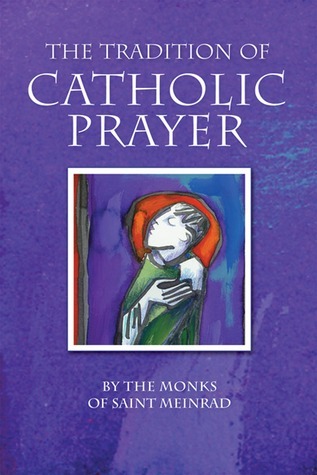
The Tradition of Catholic Prayer: Book review, reflections

In their book The Tradition of Catholic Prayer, The Benedictine monks of Saint Meinrad Monastery (editors: Christian Raab and Harry Hagan) bring us a rich and rewarding read. When we want to read about prayer, it’s natural to want to turn to monks!

The depth and breadth of this book are summarized well on the book’s back cover, beginning with the following sentence: “Catholics have a rich and ancient prayer tradition that informs contemporary practice.” No wonder that people looking to deepen their prayer life look – among other places – to the Catholic Church. The variety of Catholic prayer experience and the historical context for this “rich and ancient prayer tradition” are covered engagingly in this very readable book. It’s worth a read for anyone looking to deepen their prayer life; it has helped nourish my ever-present hunger to sustain an rich and deep prayer life.

Kim Burkhardt blogs at A Parish Catechist and The Books of the Ages.

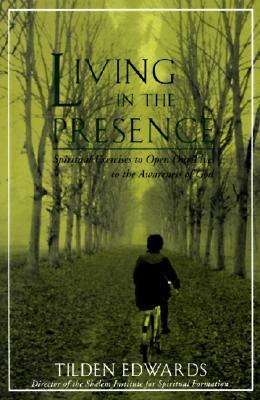
Living in the Presence (Tilden Edwards): book review

I came upon Tilden Edwards’ Living in the Presence perhaps five or six years ago in a Little Free Library. It immediately became part of my lectio divina reading on contemplative prayer. Lectio divina refers to prayerful, reflective reading of scripture; I sometimes read non-scriptural books in much the same way.

I had been gifted a state of contemplative prayer starting in October, 2016. In the period that followed, I actively – in a reflective way – read a good number of books on contemplative prayer. Living in the Presence was among these books; it provided an ample amount of nourishment for my prayer journey.

This book also brought to my attention an organization founded by the book’s author, Shalem Institute for Spiritual Formation. While Living in the Presence gave me much nourishment as I read and re-read the book, finding that groups such as the Shalem Institute exist provided me with a good amount of hope.

A valuable read for individuals who want to nurture contemplative prayer.

Kim Burkhardt blogs at A Parish Catechist and The Books of the Ages.

Teresa of Avila (autobiography): book review, reflection

It must have been 2017 where I first heard of Teresa of Avila. Fr. Bryan Dolejsi mentioned her one weekday at St. Benedict parish (Seattle), calling her a “Doctor of the Church.” “What,” I wondered, “is a Doctor of the Church….and there is a woman recognized as a Doctor of the Church? I must find out who she is!” That led me to a Seattle Public Library copy of Mirabai Starr‘s English translation of the autobiography of this 16th century Spanish mystic.

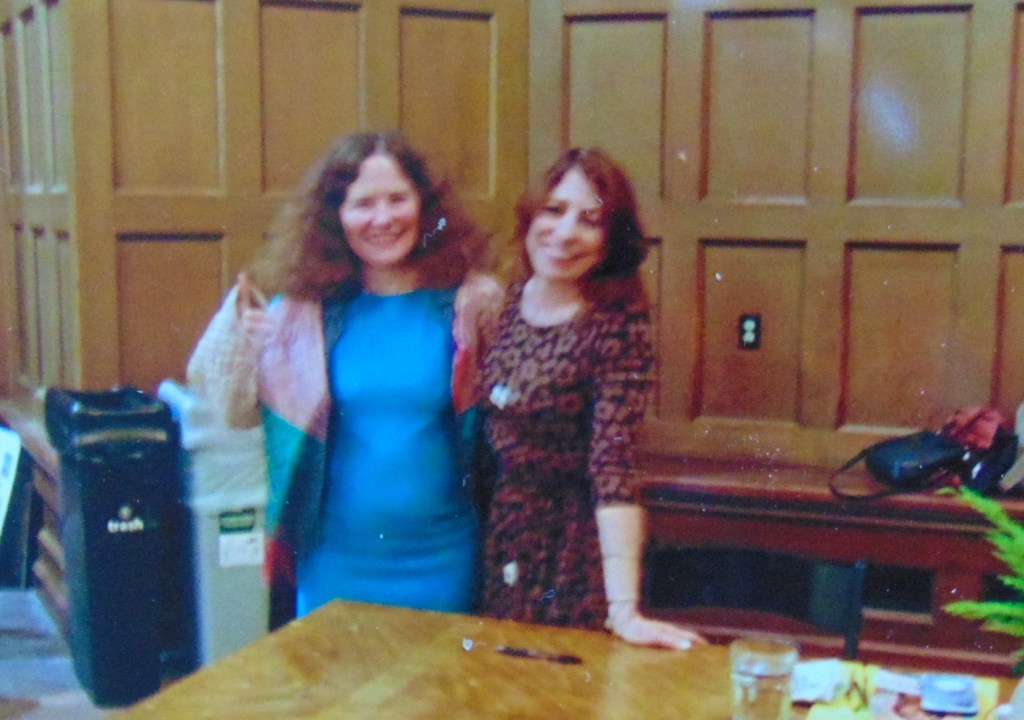
Now, my own dog-eared and frequently-consulted copy of this book is on my bookshelf. Inside the front cover is a photograph of me with the translator, Mirabai Starr, at her speaking engagement at St. Mark’s Cathedral (Episcopal) in Seattle (yes, Mirabai graciously autographed my copy of the book).

Teresa of Avila’s autobiography – her life, her mystical, contemplative experience – has actively nourished my own prayer life. When I returned to church in 2016, it was a result of a “God moment” (including a broken ankle, long story) in which God gifted me an unanticipated and emotionally nourishing period of contemplative prayer. I didn’t have the vocabulary to talk about the inner state I was experiencing (now, I know to call that period of time “an encounter with God”); Teresa’s autobiography provided me with exquisite articulation about mystical prayer. Since finding and eagerly re-reading this book over time, I’ve heard people refer to the writings of Teresa and her protege (John of the Cross) as poetry-about-prayer. I don’t feel that a “poetry” description gives justice to their writing (accurate perhaps, but the description pales); I prefer to think of the writing of these two Carmelite saints as “the voice of lived experience.”

Kim Burkhardt blogs at A Parish Catechist and The Books of the Ages.

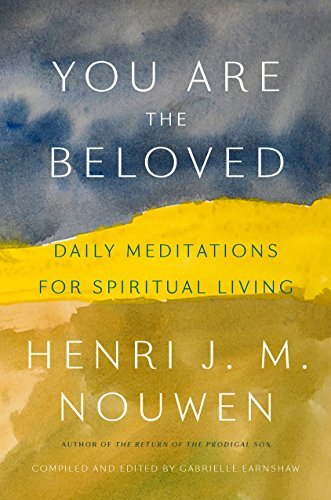
You are the Beloved: book review and reflections

Somehow, it took me until 2019 to discover the writer and priest Henri Nouwen. In 2019, our pastor at my church had us read one of Henri Nouwen’s books (With Burning Hearts). I was immediately drawn into Nouwen’s way of making a reader feel presently closer to the reality of Christ. I have since read several of Nouwen’s books and brought With Burning Hearts to my prayer group; the book was well received and led to fruitful discussions.

This book, You are the Beloved, is written as 365 daily meditations to walk a reader through a year. Gulp – I read all the meditations in several weeks. The reflections bring us closer toward “Love God, love your neighbor.” God loves us and wants to have a relationship with us. Rather than a one-way phone call in which either God or us is phoning the other (and us feeling like it is a dropped call), God wants a two way relationship in which that relationship is felt, experienced and deepened by both us and God – leading us to also love our neighbor. This reflections in this book cultivate our ability to pick up the phone and engage in such a two-way loving communication with God – and then also with our neighbor.

Kim Burkhardt blogs at A Parish Catechist and The Books of the Ages.

Feeling blue? Anxious? How do you pray?

For many of us, we first conceptualize prayer as mentally talking to God. Mentally speaking in sentences, much like we would talk to a person. Telling God what we want to say, submitting prayer requests (intercessions, our “wish list”), hoping for “an answer.”

Such prayer is certainly one way to initiate a prayer life.

There are many more ways to pray. Prayer is meant to be communication, a relationship. An analogy I heard – and like – compares prayer to a phone call. We wouldn’t just call a person we know, tell them what we want to say, then hang up as if communication were complete. Such phone calls wouldn’t help us sustain relationships with the people in our lives. That approach to prayer wouldn’t produce a full prayer life, either. Communication is relational. Prayer is relational.

God hungers to have a relationship with us – more than “one way phone calls” from us.

God hungers to be present in our lives, to transform our lives. God hungers to share love with us in a relational way in which we feel and experience God’s love for us. In order for this to happen, we need to participate in a two-way relationship with God. Prayer can be a truly interactive, relational activity in which we allow God to transform our lives. More than just a one-way phone call.

There are a myriad of ways pray. Several ways to pray include:

  • Attending church is prayer
  • Rote prayer, prayers of the liturgy: Lord’s Prayer, etc.
  • Psalms (they are always sung!)
  • Lectio Divina (reading faith books reflectively to take in the book’s meaning prayerfully)
  • Talking to God the way we would talk to a person
  • Contemplative Prayer (resting in God’s presence – sitting with God)

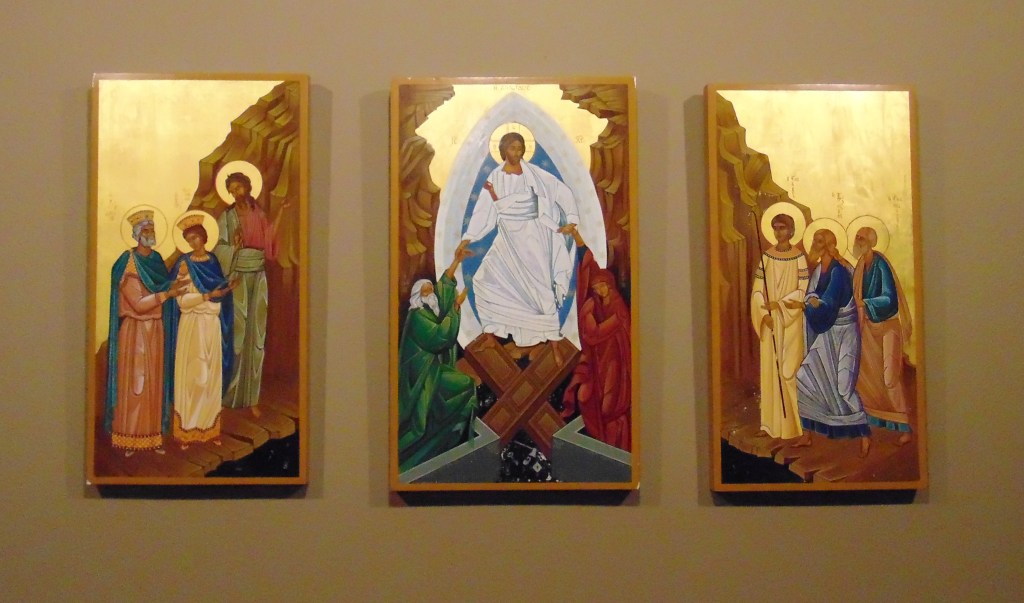
Personally, contemplative prayer is the type of prayer I find most meaningful – relationship-building. I have largely given up any “human language” in prayer (except for when I specifically do intercessory prayer); rather, my prayer life mostly consists of “resting in God’s presence.” I’m fortunate – I responded in 2016 to a “nudging of the Holy Spirit” in which I was gifted with a sustained period of feeling God’s presence in prayer. It was a life-transforming period of time; I found my way to Contemplative Outreach Northwest and now I talk to people about the power of God our lives. At present, my morning prayer consists of reflecting on the Anastasis icon above – an iconographic representation of the Harrowing of Hell; the Harrowing of Hell was Christ’s descent into Hell (between his death and resurrection) to free Adam and Eve from the result of The Fall. This particular version of Anastastis iconography is located in the chapel at St. Andrew’s Episcopal parish in Seattle, Washington. I find Anastasis to be a powerful depiction of God’s desire to free us, to transform us. God wants us to experience God’s love for us.

If prayer is unfamiliar to you or “less than what you’d like it to be,” consider taking on “prayer homework.” Pray twice per day for five minutes each time. Try out the various types of prayer listed above to find a style of prayer that you find to be of value. If you’d like to learn more about several types of prayer, my favorite book describing multiple types of prayer can be found here.

“Be still and know that I am God.”   Psalm 46:10

Kim Burkhardt’s blog can be found at A Parish Catechist.