
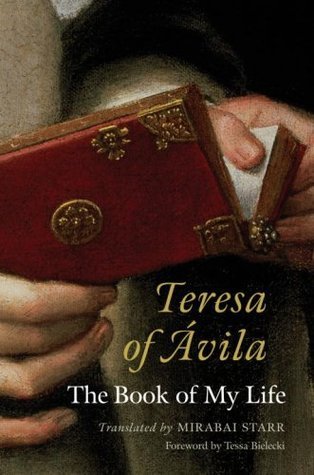
It must have been 2017 where I first heard of Teresa of Avila. Fr. Bryan Dolejsi mentioned her one weekday at St. Benedict parish (Seattle), calling her a “Doctor of the Church.” “What,” I wondered, “is a Doctor of the Church….and there is a woman recognized as a Doctor of the Church? I must find out who she is!” That led me to a Seattle Public Library copy of Mirabai Starr‘s English translation of the autobiography of this 16th century Spanish mystic.
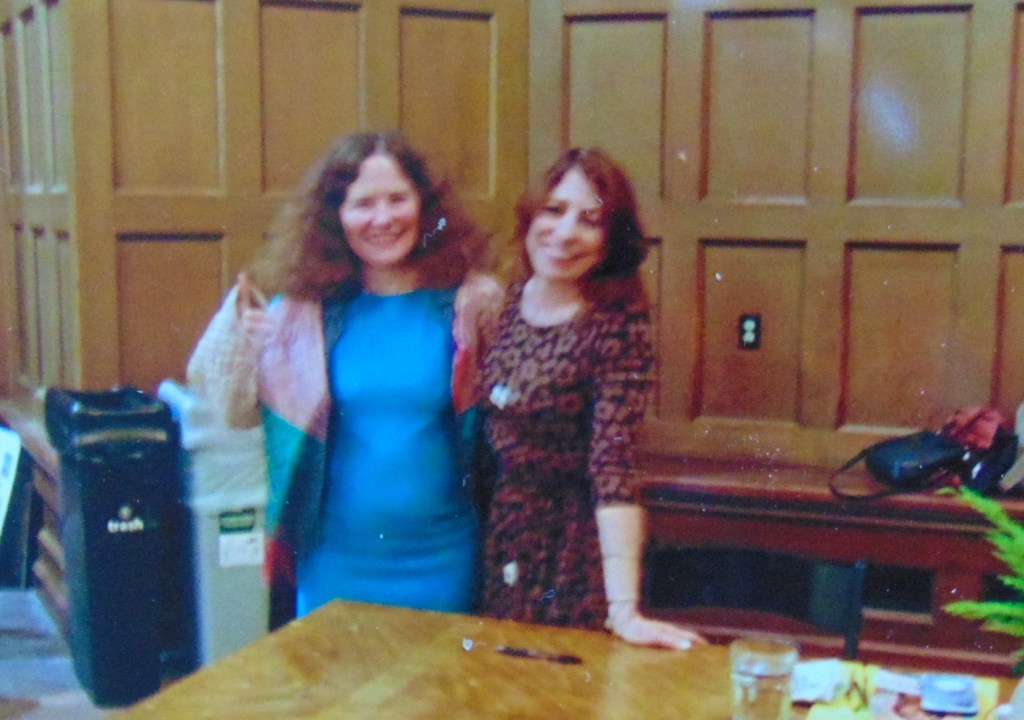
Now, my own dog-eared and frequently-consulted copy of this book is on my bookshelf. Inside the front cover is a photograph of me with the translator, Mirabai Starr, at her speaking engagement at St. Mark’s Cathedral (Episcopal) in Seattle (yes, Mirabai graciously autographed my copy of the book).
Teresa of Avila’s autobiography – her life, her mystical, contemplative experience – has actively nourished my own prayer life. When I returned to church in 2016, it was a result of a “God moment” (including a broken ankle, long story) in which God gifted me an unanticipated and emotionally nourishing period of contemplative prayer. I didn’t have the vocabulary to talk about the inner state I was experiencing (now, I know to call that period of time “an encounter with God”); Teresa’s autobiography provided me with exquisite articulation about mystical prayer. Since finding and eagerly re-reading this book over time, I’ve heard people refer to the writings of Teresa and her protege (John of the Cross) as poetry-about-prayer. I don’t feel that a “poetry” description gives justice to their writing (accurate perhaps, but the description pales); I prefer to think of the writing of these two Carmelite saints as “the voice of lived experience.”
Kim Burkhardt blogs at A Parish Catechist and The Books of the Ages.

2 thoughts on “Teresa of Avila (autobiography): book review, reflection”