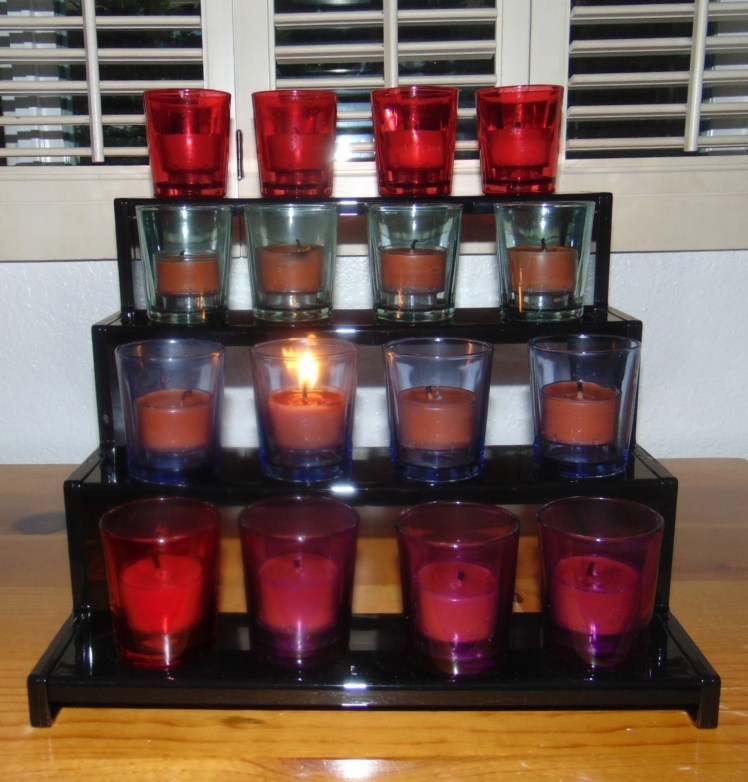
When I was accepted into in my master’s in theology program, we were instructed to start reading Liturgy of the Hours, daily divine readings read around the world by priests, religious, and interested lay people.
This excerpt from the Book of Exodus (33:7-11) is included in this morning’s Liturgy of the Hours:
7 Now Moses used to take a tent and pitch it outside the camp some distance away, calling it the “tent of meeting.” Anyone inquiring of the Lord would go to the tent of meeting outside the camp. 8 And whenever Moses went out to the tent, all the people rose and stood at the entrances to their tents, watching Moses until he entered the tent. 9 As Moses went into the tent, the pillar of cloud would come down and stay at the entrance, while the Lord spoke with Moses. 10 Whenever the people saw the pillar of cloud standing at the entrance to the tent, they all stood and worshiped, each at the entrance to their tent. 11 The Lord would speak to Moses face to face, as one speaks to a friend. Then Moses would return to the camp, but his young aide Joshua son of Nun did not leave the tent.
For anyone familiar with modern church services, it looks to me that this passage likely contributed to the historical development of today’s church services for denominations that are liturgy-based. In liturgy-based church services, everyone stands during important points in the service.
Several years ago, a musician friend observed that important parts of a church service can be identified by watching the congregation. He observed, “Catholics stand for important points of the service, while at AME (African Methodist Episcopal) singing is done during important parts of the service” (he’s been the staff musician for both denominations at different times. He said it took awhile for him as a musician to notice this distinction).
Like my music friend, I find it interesting to observe the flow of religious services.
In the earliest days of Christianity, Christians met in homes and shared meals together – something along the lines of breaking bread together as Christ did with the apostles at “the last supper” (I am generalizing very broadly). From what I understand of church history, meeting in “churches” – public buildings – began after Constantine legalized Christianity in the Roman Empire in the early 300’s. It took time after that for the church liturgy to start looking like the church services that we recognize today. Occasional adjustments to church services continue to happen – such as switching from Latin to the local language following Vatican II.
Side note….. Has anyone else noticed the subtle change in church services that I’ve noticed following COVID? Prior to COVID, the “Catholic calisthenics” during liturgical services would include parishioners putting down the kneelers when it’s time to kneel. Often (though maybe not universally), there would then be lifting-and-lowering of the kneelers during each portion of the “calisthenics” portion of the service….. Then….when services started up again following COVID closures, I noticed that it became more common for parishioners to simply leave the kneelers “down” during the entire “calisthenics” portion of the service (i.e., leaving the kneelers down while standing and then simply returning to kneeling on kneelers that are left down). Now, it seems that increasing numbers of people are returning to “lifting and lowering” the kneelers during “calisthenics.”
Wishing everyone a fruitful Lenten season…..
Kim Burkhardt blogs about faith at The Hermitage Within. Thank you for reading this faith blog and for sharing it with your friends. While you are here, please feel welcome to provide support to sustain this blog ($$).
