Book Review: Growing into God….Christian Maturity
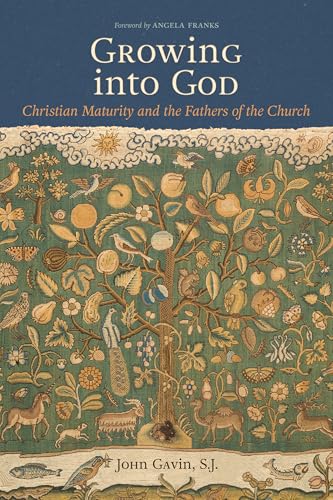
When I saw this book on the Catholic University of America Press website, it took no time at all for me to pursue getting a copy – I very much wanted to read the insights offered in the book. I wanted to use the book to gauge if I am maturing (I would like to think so!) and find measuring sticks and tools for maturing further.  In addition, I wanted the book to help me collect ideas on helping others move toward Christian maturity.

In the foreword of the book, Angela Franks states, “In an age of self-help books, Fr. Gavin has written a God-help book, and this is exactly what we need.”  Amen.

On pages two and three of Growing into God: the Fathers of the Church on Christian Maturity, Fr. Gavin spoke to the traditional idea of “moving toward Christian perfection” (if one spends enough time in church and reads enough books on Christianity, one comes across this idea occasionally) and indicated that we should instead move toward Christian maturity.  The idea of moving toward maturity rather than perfection seems more plausible.

Fr. Gavin also speaks briefly at the beginning of the book of some of the immaturities of our age (being childish instead of childlike) and of the need for more than scientific descriptions of stages of maturation – he indicates a need for instruction on how to overcome the roadblocks to maturity.  He then moves into lessons from the early Christian fathers – “the pastors, preachers, teachers, catechists, and theologians “ from Christianity’s first seven centuries – about how to grow in Christian maturity.  He tells the reader at the outset that the book will be written in several sections: “establish(ing) the three pillars of Christian maturity…., the opposition to maturation….., examin(ing) the means of maturity given to us in the life of the church…., [and a review of] four essential expressions of Christian adulthood…” (page five).  

As I hoped, this book pushes the reader beyond “easy” (and, therefore, not very fruitful) efforts toward maturity to a willingness to do the harder work of truly maturing.  I admire people who can move us toward a willingness to be better and achieve more.   Fr. Gavin, in this book, writes of the two-fold factors necessary for Christian maturity – inspiring/pushing us to apply our own “hard work” effort toward maturity coupled with surrendering to that which God alone does in bringing about in our human development.  Gavin writes of Christ’s baptism in the Jordan River when he began his public ministry – locals at the time would have recognized the Jordan River as the river crossed by the Jews to leave slavery behind and enter the Promised Land.   We likewise surrender our inadequate selves, allowing God to transform us into the people God means for us to become.  [Why, I must ask, do so many of us seem to do that surrender in small units over a lifetime?  A fuller transformation earlier in life would be so much better…… I mentally return to what James Fowler spoke of in his Stages of Faith book.  He writes that not many people grow into the highest stages of faith development.  He lists Mother Teresa, Martin Luther King, and Ghandi as three people who reach the highest level of faith maturity….].

Interspersed with direct insights toward how to mature in Father Gavin’s book are a number of “pithy” insights.  For example: “Biological growth, with all its complications and challenges, does not guarantee human maturation.  Embodiment does indeed shape the psychological and even spiritual sies of the person, but the mystery of human freedom and interiority defy the parameters of corporal extension, girth, and hormones.  The precocity of a youth, the vigor of an elder, and the childish behavior of some adults demonstrate that humans ripen or rot at any time of life. (page 6)”

This book, Growing into God: The Fathers of the Church on Christian Maturity, also makes great reading in that Fr. Gavin works in writings and insights from a cross section of Patristic Fathers – allowing us to sample writings in one place from multiple early Christian writers.

This book is a useful read for readers of any age who wants to grow up.

Kim Burkhardt blogs about faith at The Hermitage Within. Thank you for reading this faith blog and for sharing it with your friends. While you are here, please feel welcome to provide support to sustain this blog ($$).

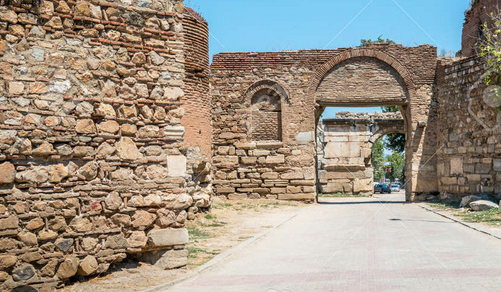
Being vulnerable in prayer – reach toward “saint in training”

Reflection

We humans are imperfect. In anyone questions our fallibility, just turn on the evening news and watch what humans are doing to each other. For those of us whose failings don’t make it on to the evening news (hopefully, most of us), we typically have friends and relatives who are familiar with our particular human failings.

I have an active prayer life. In recent months, I have surrendered in prayer yet again, “God fix my particular combination of failings. Do something to improve this mess.” Not that my mess is news-worthy (local TV journalists haven’t been called to my door!), but there are aspects of my life that “I wouldn’t have chosen” (I learned that phrase several years ago from a friend named Linda). I didn’t intentionally create this stuff that “I wouldn’t have chosen,” but I am also seeing that solving some of this just might require that I inch closer to sainthood (i.e., try being a saint in training).

I was taught long ago that I when I surrender to letting God fix something in my life (i.e., improve me rather than expecting my circumstances to be improved), it’s my job to not interfere in God’s plans. In other words, let God “do his thing” and be emotionally responsive to whatever promptings God initiates (and, if necessary, talk with a fellow human about this process to be sure I’m not mis-reading cues). Sometimes, that level of surrender is terrifying. “What’s God going to do in changing me or my life?” News flash: God doesn’t do anything bad. Just because we can’t see yet what the results are going to be doesn’t mean that the results are going to be something we will be dissatisfied with. The results are always good.

I am currently in the midst of that surrender-in-prayer and some subsequent emotional change. I’ve learned over time that these time periods are fruitful. The process, though, can be “discombobulating.” That’s okay. I’ve got to a point that I’ve learned to muddle through the discombobulation (i.e., “roll with it”). One of the “fruitful lessons” at present seems to be that I need to be freer and more conversationally open with the people around me. Yikes. For someone as introverted as me, that’s a challenge. A few times recently, though, being more communicative has had positive results.

Being vulnerable in prayer to letting God improve us is always a good thing. Have you given that a try lately? God loves us and will show up when invited! God wants us to be the people he created us to be.

Kim Burkhardt blogs about faith at The Hermitage Within. Thank you for reading this faith blog and for sharing it with your friends. While you are here, please feel welcome to provide support to sustain this blog ($$).
Twists and turns amongst Catholic rites – with a surprise

I started reading about Eastern Catholic rites and Eastern Orthodox traditions in 2023. I periodically visit their weekend services.

I was surprised to learn that there are more than twenty Catholic rites in full communion with Rome (Eritrean Rite, Byzantine Rite, etc.) and a similar number of Orthodox traditions (Greek Orthodox, Russian Orthodox, Ukrainian Orthodox, Syrian Orthodox, Coptic Orthodox, Eritrean Orthodox, Byzantine Orthodox, etc.). When I recently tried to identify all the rites and traditions, I was grateful to find a list here (scroll down to page two).

If anyone wants to take a deep dive down this rabbit hole of learning about Eastern Churches, here’s a list of relevant books I’ve read in the last three years (the last time I moved, I looked for a residence with enough wall space for my bookshelves!):

I find it interesting how much these rites and traditions have in common and, alternately, the distinct ways in which “each lung breaths.” Pope John Paul wrote in his 1995 encyclical Ut Unum Sint, in gist, “Living only within the western or eastern church is like living with only one lung; both traditions are needed for the full breath of the Christian faith. “

In looking at how much these rites and traditions have in common, one can start by looking at the liturgy (i.e. how a service is structured). Anyone who is familiar with the liturgy of one rite can visit another rite – even in another language – and anticipate the general flow of the service: the mass or divine liturgy (depending up on the rite or tradition) begins with the priest processing into the church (typically with music), then there are readings and a homily, then there is the Eucharist (holy communion), then the closing of the service. We also share belief in the Kerygma (belief in Jesus, that in his death and resurrection he has conquered sin and death). There’s plenty that we share in common…..

What fascinates me at the moment is something I read this month in Drobner’s Fathers of the Church: A Comprehensive Introduction. It turns out that there were churches/groups in the early days of Christianity that didn’t Hellenize. What ?!?!

I had to put down Drobner’s Fathers of the Church: A Comprehensive Introduction. I was floored at the very idea that there might be non-Hellenized Christianity. What exactly would that look like?

Anyone generally familiar with the history and development of Christianity knows that as the apostles and early Church fathers led the church, aspects of Greek (i.e., Hellenistic) philosophy (neoplatonic thought, etc.) were incorporated into how most of us understand Christianity. Concepts of duality, the construct of the Trinity, etc. – Hellenistic philosophy has significantly impacted how Christianity is taught to many of us. Therefore, I was stunned that there would be non-Hellenized Christians. What would this look like?

I, in much surprise, went down an online rabbit hole to learn more about “Non-Hellenized Christianity.” It turns out that there are still small numbers of Non-Hellenized or little-Hellenized Christians around, some of whose rites are in communion with Rome. They perceive Christianity much like early Hebrew Christianity, with little or no input of Greek philosophy. They have more of a focus on one’s community in the here-and-now and less focus on the kingdom to come, less focus on various aspects of duality, etc.

I don’t know yet how much time I will spend learning about non-Hellenized Christianity. I did wonder how non-Hellenized Christianity could be reconciled with broader Christian thought. Hmmm….. Isn’t the Holy Spirit moving us toward a fuller understanding of how God wants us to understand Christian theology? Therefore, wasn’t an incorporation of Hellenistic philosophy necessary for the full expression of Christian theology (since that’s the road that Christianity went down)? On the other hand, part of me is attracted to a simpler Christianity. Part of me has always had some discomfort with having incorporated secular philosophy into Christian thought (I am not alone in raising this question)…. How to think about this? I am still taking this in. So far, I have decided that grasping non-Hellenistic Christianity must fall under “breathing with both lungs” (see above).

There is always more to learn….

Kim Burkhardt blogs about faith at The Hermitage Within. Thank you for reading this faith blog and for sharing it with your friends. While you are here, please feel welcome to provide support to sustain this blog ($$).
Fall is approaching and so is religious education

As we squeeze in a few more end-of-summer activities, students are getting ready to head back to school.

Education is not just classroom academics.

For people of faith, our faith development is also a life-long journey. What we learned about religion in Sunday School laid a child’s-level foundation. As adults, we continue our life-long education on how to manage finances, grow in navigating adult-level relationships, manage careers, etc. There is also always more to learn in our adult faith journeys.

Adult religious education is multi-faceted. Bible studies educate us about the Biblical content and how to make it relevant in our lives. As mentioned in our previous blog post, for example, “Historically within Judaism, water symbolically represented tumult and chaos. So, in separating water and land [in the Genesis creation story]… God was establishing that he separates tumultuous chaos from calm…” while “Peter demonstrated his utter trust in Christ by…walking toward him on the waiter, but then Peter lost his faith and began to sink when the wind began to blow and the water would have become choppy. This is a story about us losing our faith when the winds and waters of live become chaotic……Yet, God is always here for us in our brokenness.” Theological studies go on to study faith in a myriad of ways……

Coming this fall, The Hermitage Within (which delivers this faith blog you read) is delivering adult religious ed sessions over several Tuesday evenings and Saturday mornings in September and October. The presenter, Kim Burkhardt, has delivered these types of workshops at churches. She has a Certificate in Pastoral Accompaniment and is currently earning a Master’s in Theological Studies. We invite you to join us. Registration is now open (Zoom – you can “learn from home!”).

Sign up here for one or more of these growing-in-faith sessions. You can also contact us to ask any event-related questions. We welcome you to these religious education events.

Kim Burkhardt blogs about faith at The Hermitage Within. Thank you for reading this faith blog and for sharing it with your friends. While you are here, please feel welcome to provide support to sustain this blog ($$).
And then there was light…..

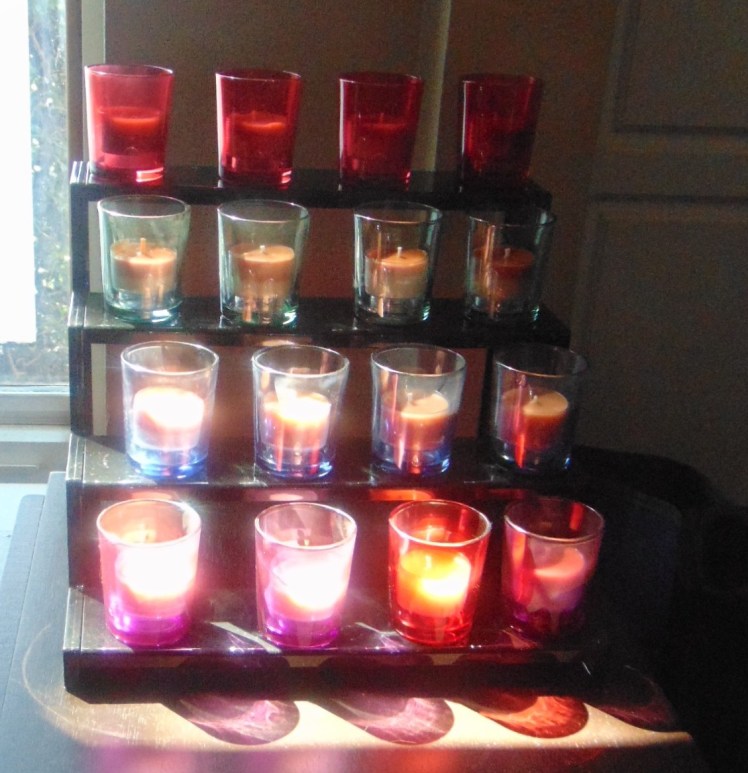
When you walk along the nave (body) of most Catholic churches, you’ll find rows of votive candles for parishioners to light as a prayer and reflection activity (often, these candles are lit to pray for someone or to pray about a pressing personal matter).

This year, I put together my own version of “church prayer candles” at home. As shown above, I display them where they receive afternoon sunlight. Sunlight resting upon the candles provides me with a moment of cheer.

Themes of light and darkness are a frequent form of symbolism in Christianity.

On the first day of Earth’s creation, we read in Genesis, “the earth was formless and void, and darkness was over the surface of the deep. And the Spirit of God was hovering over the surface of the waters. And God said, ‘Let there be light,” and there was light.’ And God saw that the light was good, and He separated the light from the darkness.… (Genesis 1:2-4).”

When we talk about faith and our lives, we likewise make reference to light whenever we speak of that which is good while referring to darkness when talking about challenges.

Further along in the Genesis creation story, “God said, ‘Let the water under the sky be gathered to one place, and let dry ground appear.’ And it was so.  God called the dry ground ‘land,’ and the gathered waters he called ‘seas.’ And God saw that it was good (Genesis 1:9-10).” Historically within Judaism, water symbolically represented tumult and chaos. So, in separating water and land… God was establishing that he separates tumultuous chaos from calm. Likewise, Peter trusted Christ in walking toward him on the sea in the story told in Matthew Chapter 14. The disciples had ween Christ walking on water as he approached their boat. Peter demonstrated his utter trust in Christ by likewise walking toward him on the waiter, but then Peter lost his faith and began to sind when the wind began to blow and the water would have become choppy. This is a story about us losing our faith when the winds and waters of live become chaotic……Yet, God is always here for us in our brokenness.

In Trevor Thomson’s Christ in Me Arise song, we prayerfully sing at church “Christ in me arise and dispel all the darkness. Christ in me arise with all your strength and I will rise in you.”

I have been reflecting lately on the varying ways that our light shines when we surrender to allowing God transform our brokenness. The specifics of this look different from one person to the next. In one person, they give up being the outwardly difficult person who makes life hard for the people around them, becoming a person who finds daily ways to be helpful and useful to the people in them. Another person outgrows a childhood of economic and social challenges to become an adult who inspires the best in the people around them.

Allowing God to change us into the people we are truly meant to be is transformative. Who doesn’t want to become their best self? Yet, how easy it can be to remain stuck in fear and habit. Peter, when approaching Christ in utter faith, lost faith and began to sink when the water became tumultuous. Don’t we also want to hang on to our own desire to control our circumstances rather than trusting God to change our very most inner self? It really is an either/or situation: let God transform our very being or fail to become the person God intends for us to be. FYI, if you are struggling to give up control (by the way, how well is that working?)…..God has no negative plans for the transformative light that he intends for us.

When we surrender to God working within us, God truly will transform us into our best self.

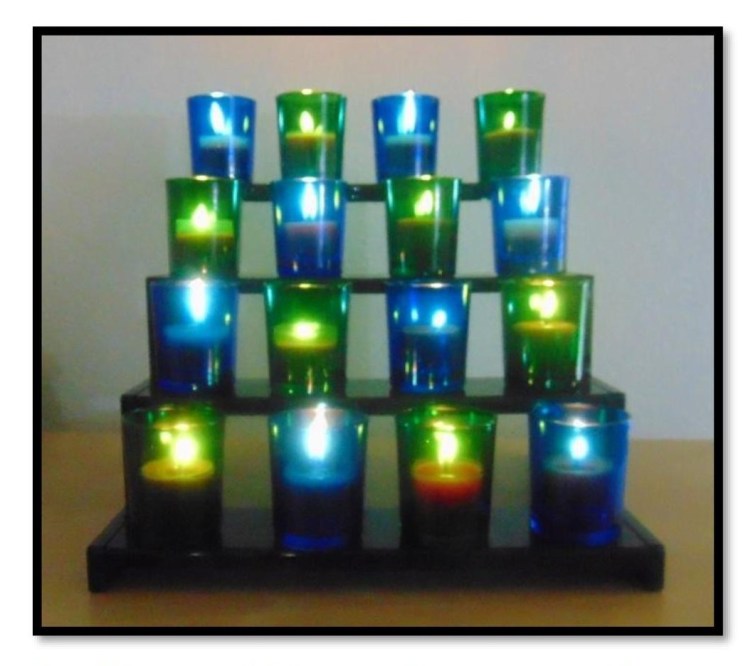
Have fun with “Church candles at home.” Contact
The Hermitage Within blog about creating “church
candles at home” with candle holders that match the
colors of your favorite sports team or your favorite
school!

Kim Burkhardt blogs about faith at The Hermitage Within. Thank you for reading this faith blog and for sharing it with your friends. While you are here, please feel welcome to provide support to sustain this blog ($$).
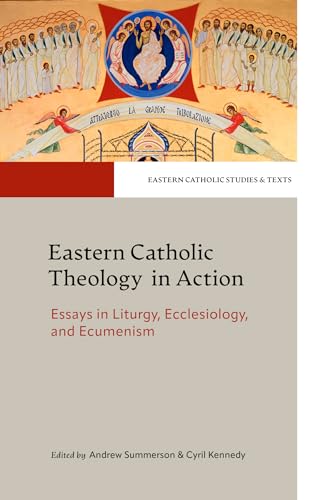
Book Review: Eastern Catholic Theology in Action

This book, Eastern Catholic Theology in Action – Essays in Liturgy, Ecclesiology, and Ecumenism, is part of a useful collection of resources being developed by The Catholic University of America Press.

I came upon this book recently while writing a paper exploring ecumenism within/among Roman Catholicism, Catholicism’s Eastern rites, and Eastern Orthodox traditions. While I had already read several books about Eastern rites and Orthodox traditions and have worked as a liturgist in the Roman Catholic rite, I spent far more time than I expected pulling together and synthesizing accurate and reflective information for my paper. I was initially self-critical (“Why did it take so much time to write this paper? I’ve already read several books about Eastern rites and traditions. Aren’t I more academically competent than this?”). Then, after I submitted my own academic paper for grading, I started reading in full the book Eastern Catholic Theology in Action (2024). The editors and publishers explain at the book’s beginning that too little academic and theological attention has been given to Eastern Catholic rites; The Catholic University of America Press has committed to changing this with a series of books – include this book. Reading this provided me with a sense of relief. I realized that the books I had already read (I reviewed some of them for this blog) were catechetically insightful for understanding the spirituality and liturgical perspectives of Eastern rites and traditions, but did not lay enough academic groundwork needed for the Master’s in Theology paper I wrote. Of note: the inside cover of this book (Eastern Catholic Theology in Action – Essays in Liturgy, Ecclesiology, and Ecumenism) states that scholars of Eastern Christianity often have little to offer when asked for an intro to Eastern Christian theology. Therefore, I appreciate The Catholic University of America Press’s commitment to ongoing scholarly attention to Eastern Catholic rites. My recent dismay at how hard I worked to write my own paper has produced enthusiasm for absorbing The Catholic University of America Press academic content on this subject. I bookmarked their website to keep track of additional pending publications about Eastern Catholic rites. This book is contributing to my academic development from reading books catechetically to thinking academically about ecclesial theology.

Eastern Catholic Theology in Action – Essays in Liturgy, Ecclesiology, and Ecumenism has been published to scholastically explore “the unique patrimony of the Eastern Catholic Churches, divided according to the categories of Liturgy, Theology, Spirituality, Discipline, and Culture.” The book provides a deep dive into the concepts I sought to discuss in my own brief paper. This book is a must-read for those seeking a deepened understanding of Eastern Catholic rites. Count The Catholic University of America Press as a go-to resource for Westerners wanting to learn about Eastern rites.

Kim Burkhardt blogs about faith at The Hermitage Within. Thank you for reading this faith blog and for sharing it with your friends. While you are here, please feel welcome to provide support to sustain this blog ($$).
Insights along the journey of faith come sometimes quickly, sometimes slowly

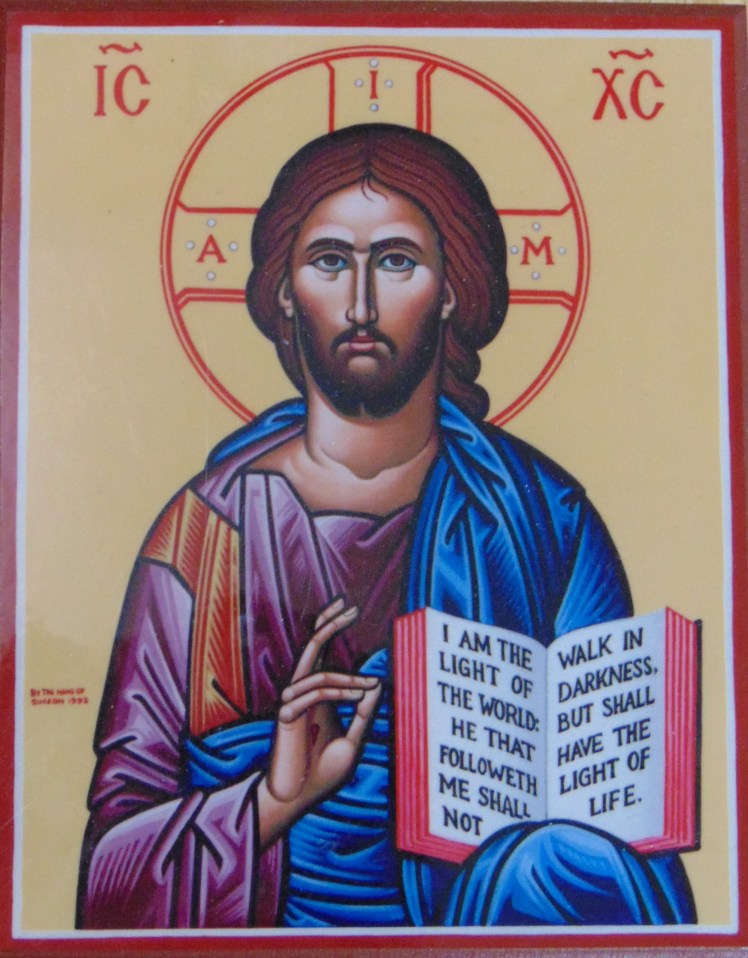
image of Christ

Ten years ago, I had a re-conversion experience that has born much fruit, bringing about something of an inward emotional re-arrangement (some elements of that story are told here). In the period following that re-conversion experience, I had an extended sense of God loving me. Directly and personally.

How, though, do we explain such experiences? I recently wrote in a paper for my Master’s in Theology that “In recent years, I have been challenged in effort to foster meaningful dialogue about how we each experience our personal faith journeys.  Insufficient dialogue on these topics has been a point of frustration and emotional isolation.”

Periodically, I have found “bits and pieces” of how to articulate such experiences. At one point, I heard a parish priest speak of having an “encounter with God” outdoors one afternoon in the American Southwest when he was in his twenties. “Oh, okay,” I recognized – “I can tell people that I had an encounter with God” to partially tell of my experience. Other tidbits of how to talk of my experience come along occasionally. Also, I occasionally find people “in the pews of churches” who are undergoing some kind of an inward emotional re-arrangement that is being wrought by God. I have met two such people in the last five years. All I knew to do was to be present with them. They and I would try to “talk around” what they were experiencing as neither they now I knew how to fully articulate it (thought they were very clearly hungry for conversation and community around what they were experiencing). When Teresa of Avila was told in the 1500’s to write her story – of mystical experiences, etc. – she likewise had to invent a way of describing her inner experiences (she did a great job!).

I discovered a couple of months ago that Augustine wrote about “interiority.” “Ah ha,” I thought! Perhaps, I hoped, the writings of this early church father and theologian might help me to learn to better foster dialogue about how we experience the “interiority” of how we experience our inner faith journeys. I explored this in a paper for school. The paper proved to meander somewhat. In working on that paper, I was better able to articulate the parameters my own questions and came across a few gems of insight about communicating what I mean by spiritual interiority. For example, the Cambridge Companion to Augustine’s Confession tells us:

“Augustine directs his readers’ attention to the soul as an inner world, an interior space of the self that is not literally a place, but rather a dimension of being in which truths may be found, including God as the eternal truth that has always been present both within and above the soul as its creator. Yet, the self comes late to God within itself, because as sinners we keep turning our attention outward, trying to find happiness in external things.”

In order to go inward, the Cambridge Companion to Augustine’s Confessions (above) also communicates about turning away from external distractions toward your own consciousness.  Then, springboarding into transcending oneself becomes possible by connecting with the God who lives within us.

I have experienced these statements; now the written statements above as reference to more fully articulate what it is I want to discuss within faith communities. Great. It took ten years to find these statements.

Our own interiority, I think, is individual and hard to communicate. Other folks have corroborated in their own ways that such interiority can be hard to communicate. But the likes of Teresa of Avila and Augustine manage to communicate their experience!

I would like for “everyday people in church pews” to be able to talk about our interior faith experiences. Building community around sharing our encounters with God – and simple every day faith maturation – should be the privilege of everyone who is on a faith journey. I think, perhaps, that some people come to sharing such easier than I do…..

In two other books I am currently reading, I am finding more gems that offer insights into describing the experiences of religious interiority:

  • In his book Doors to the Sacred, Joseph Martos writes that what we experience in religious sacraments are doors that open for us the experience that which is sacred. Wow. What a way to help us articulate our experiences.
  • Stephen B. Bevans writes in his book Community of Missionary Disciples (a book we are reading for school) that contemplation is “God ‘gazing’ on us in love, as Pope Francis often says.” I just read this today. I needed that statement last week. I had sent my recent academic paper (above) to the priest I got matched up with to offer spiritual guidance as I do my Master’s program. He had asked me to explain verbally what I meant when I said that I had experienced God directly loving me. All I could say last week that it was like God was present as person within the space of my inward “personal space” loving me.
  • In Joseph Martos’ Doors to the Sacred book, I also came upon the phrase “mystical metaphysics.” I Googled that phrase. Reading the search results and tweaking my subsequent search queries led to the phrase “Catholic mystical metaphysics” and the word “ontology”(the branch of philosophy that investigates the nature of existence).

So, maybe what I am really interested in is ontology of Catholic mystical metaphysics. Hmmm….. Am I thinking to hard in trying to find a way for we “everyday people in the pews to talk to each other?” Do I just communicate less readily than other people? I have any number of books written by saints, nuns, etc. who have described their own prayer journeys and mysticism. Maybe I just need to communicate more freely. Perhaps. Yet, I also want to hear more dialogue from “every day people of faith” about how we experience our faith journeys. What’s it like when you turn to God in prayer? What’s it like when you feel God loving you? What does it feel like when you respond to those occasional “nudges” we all get occasionally that might be the Holy Spirit trying to get our attention? (and, I am still getting asked what I mean when I say “interiority,” even after writing the paper mentioned above).

We have writers such as Thomas Merton, Teresa of Avila, Edith Stein, and John of the Cross to read. Should we just satisfy ourselves with reading what they have to say about the spiritual life?

I still want to figure out how to talk more freely about the ontology of Catholic mystical metaphysics. Maybe I think too much. But, I want to build community around this topic. The U.S. Surgeon general says that we have an “epidemic of loneliness” and the subsequent health consequences of that “epidemic of loneliness.” I don’t think we are suppose to be lonely. Church buildings become places of community when we talk to each other. Even the mystic Teresa of Avila – now a Doctor of the Church – had to figure out how to articulate her experience. Surely, we “every day people” can figure out how to share with each other the experiences of our inner religious experiences to build community around the experience of our faith journeys.

I will continue working on this…..

Kim Burkhardt blogs about faith at The Hermitage Within. Thank you for reading this faith blog and for sharing it with your friends. While you are here, please feel welcome to provide support to sustain this blog ($$).

More on the trajectories of our faith journeys…..

I wrote in my last post that I am interested in people “exploring and sharing the trajectories of our (faith) lives” with one another….I am interested in Augustine’s “interiority.”….. I’ve been trying to figure out for several years how to get church people today to talk to each other in more depth about how we each experience our faith…..”

It can take a long time, it seems, to uncover how to speak to one another about what we experience inwardly……

…..More of how to speak of my inner journey seems to be coming to light. So, here goes an effort to articulate some of my own experience…..

At a point in life when I was particularly discouraged – swallowed up in a dark emotional abyss – social circumstances led me to attend a Friday evening mass. I avowed that I was there as a one-off, with no intention of returning to the faith tradition of my childhood. Much to my surprise, the priest’s faith “filled an empty hole I had been walking around with” during the homily. On my way home, I fell off a curb and broke my ankle – rendering me stuck on the couch at home with no way to distract myself from considering the impact of that homily. By Monday, I decided that perhaps I needed to talk to the priest about returning to church. By the end of the month, I was a parishioner at a nearby parish and “no one could get rid of me with dynamite” (that story is told here).

In the period that followed, I had an extended period of feeling God loving me. Directly.

An inner transformation unfolded. Over time, I told several people that an inner reorganization was taking place, but I had no words to describe it. I wanted to discuss the particulars of it, but had no way to talk about it…… As an aside, the priest at the parish I joined seemed rather puzzled to see me at mass at least twice on many weekends. I needed what was happening at mass – being at mass contributed to this inward transformation.

The following summer, I heard mention at daily mass of Teresa of Avila – a “Doctor of the Church.” What? What is a “Doctor of the Church?” I must find out about this Teresa of Avila…….

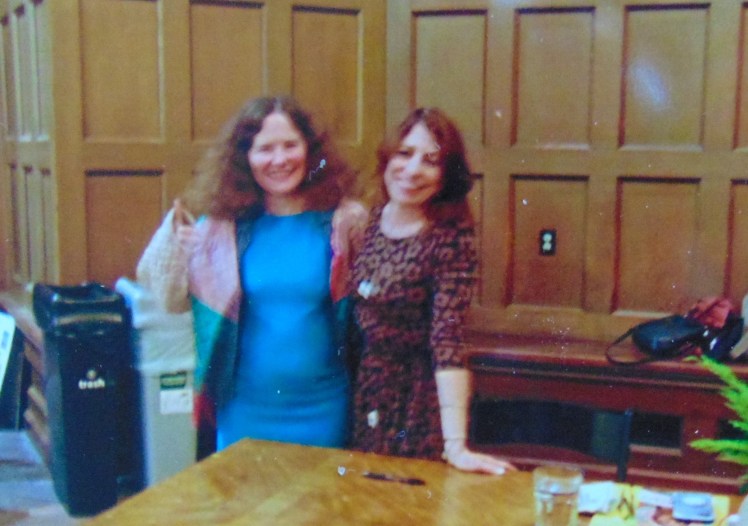
In the weeks that followed, I read Teresa of Avila’s autobiography. It provided me with much nourishment. I continued to read and re-read parts of it for a time. And, fortunately, I was able to meet the translator who had written the English copy I had read (Mirabai Starr came to Seattle on a book tour for one of her other books. I attended her presentation at St. Mark’s Episcopal Cathedral and she graciously signed my copy of her translation).

Later – perhaps another three or four years later – I was discussing Teresa of Avila with another nearby priest. This Trappist studied in Rome….. He said, “Oh, yes, I took a class once about Teresa of Avila.” I replied – simply – “Oh. I just understood her.” He looked at me and stammered. “You,” he said, “were given a GRACE.”

Yes, I had been given a grace that allowed me to “simply understand” Teresa of Avila. What was crucial to the story, however, was that the depth of the discouragement I had experienced (above) was such that God recognized my need for grace. Conditions dictate circumstances……

God loves us enough to offer us grace. Sometimes, that grace shows up when we particularly need it.

…..We have to be inwardly attentive enough to recognize this grace when it is offered. And, we have free will. It’s up to us whether or not we are going to accept this grace when it is offered…… Sometimes, I suppose, God may be very specific in these offers of grace to be sure we notice – I reference my “broken ankle story” as an example (I also acknowledge that I sometimes simply trip in the course of walking around….. I was born with faulty joints in my feet that render me physically clumsy. Make of that what you will…..).

…..”For God so loved the world that God gave his only son” for us (John 3:16). Absolute love for us – sacrificial love – is the only possible way that Jesus’ death on a cross and his resurrection makes any sense. The cross-and-resurrection story makes no sense at all when considered from a biology perspective. Self-sacrificing love, though – redeeming and loving beyond measure…… Such love is redemptive on a level that heals us……

So how does one go about describing an inner transformation of the sort I am writing about here? ……. I am currently reading Frederick Bauerschmidt’s Catholic Theology: An Introduction for one of my master’s in theology classes. In it, Bauerschmidt describes the differing Catholic and Protestant views on Justification by faith (i.e., do we experience justification by faith alone or by a combination of faith and our willingness to thus love people around us to therefore take care of the people around us), Bauerschmidt goes in depth about various theological ideas over the centuries about grace. There’s not simply the happening of “God’s grace and that’s that.” No. Rather, there are levels, types, degrees, and consequences of grace. For example (I’m gleaning this from Bauerschmidt’s book):

  • There’s prevenience grace – God providing us with grace because we need it (we need it because of original sin. If you wonder if original sin actually happened or actually exists, just turn on the evening news. No other explanation – psychological or otherwise – fully explains the scope of human brokenness).
  • There is “cooperative grace” in which we cooperate with God by allowing God to transform us when grace is offered. Oh, okay. Following the homily and broken ankle I mentioned earlier, it looks as though I participated in “cooperative grace” (it was the only good path forward at the time….).
  • At the Council of Trent (1545 – 1563), Catholics reasserted the traditional teaching that we are justified in Christ by a faith that is shaped by love of God (fides caritate fomata), a love that manifests itself in good works. The council’s Decree on Justification summarizes this process as ‘a transition (translatio) from the state in which a person is born a child of the first Adam to the state of grace and of adoption as children of God through the agency of the second Adam, Jesus Christ our savior’ (c. 4 in D 124). This transition ‘consists not only in the forgiveness of sins but also in the sanctification and renewal of the inward being by a willing acceptance of the grace and gifts whereby from being unjust becomes just…. (ch. 7…..)……”

So, when we are sufficiently inwardly attentive to God’s grace and we allow that grace to unfold, God changes us. God makes of us a new creation.

That inner transformation of becoming a new creation is experienced as truly miraculous.

At the same time, while I found the period of time I experienced to be truly transformative I also found it to be painfully slow. God, I found, offers us grace and still allows us to experience our daily foibles and the day-to-day consequences of our choices amidst “the human condition.” The parish priest I had during that time heard in the confessional the “too slow and human foibles” aspects of what goes on during periods of transformative change (I feel for him for what he found himself hearing in the confessional).

What I do know for sure:

  • We can experience God’s love for us.
  • What we hear in church about being made a new creation is for real.
  • God’s grace does happen.
  • The implementation of God’s grace in our lives is dependent upon our observation of this grace and our cooperative grace (i.e., God doesn’t act in our lives without our cooperation).
  • My day-to-day life today still has the very human hallmarks of the human condition (“saints we ain’t”). But, this “new creation” experience is yet transformative…. My prayer life is on a very different foundation than it was before “the homily and the broken ankle.”
  • God expects us to learn to love other people and to learn how to put that into practice. That’s what we’re here to do……

I hope to continue toward finding ways to facilitate conversations about our interior faith journeys……

Kim Burkhardt blogs about faith at The Hermitage Within. Thank you for reading this faith blog and for sharing it with your friends. While you are here, please feel welcome to provide support to sustain this blog ($$).
Discussing the trajectories of our faith journeys….

I am reading a book about the domestic activities of women living in Colonial New England during the years 1650 – 1750 (Good Wives: Image and Reality….). The detective work that makes such books interests me. The book’s author combed through probate records and other such surviving documents from the time to identify aspects of people’s lives – the contents of people’s household possessions, etc. Probate records would identify things such as “this household had four rooms. “The family’s bed was kept in the parlour downstairs, while the spinning wheel was kept in one of the two upstairs rooms.” From that, deductions can be made about day-to-day domestic logistics…..

When I co-wrote my Irish great-great grandmother’s biography in 2016, we did the same sort of detective work. Much footwork to find public records combined with family interviews went into being able write the following “book cover” summary of the life of my great-great grandmother who died thirty-two years before I was born: “Harriet was born in Co. Sligo the day the U.S. Union Army reorganized during the U.S. Civil War – meaning she was born in Yeats Country two years ahead of William Butler Yeats. Ireland’s emerging railroad system allowed her family to move all over Ireland as her Schoolmaster father moved from job to job. She married in Dublin the year James Joyce was born in that city. Harriet spent the longest period of her life in Co. Wicklow. Stories survive of her reading turn-of-the-century news about the Boer War to an illiterate neighbour. Harriet spent forty years raising children with a blind spouse. She emigrated the year after the Titanic sank (three years before the 1916 uprising). She died the day the Soviets invaded Poland. Two grandsons participated in D-Day, while another participated in the invasion of Japan.”

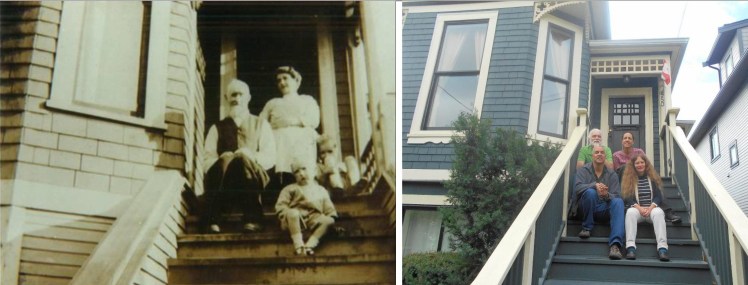
I have three photos of Harriet. In one of those photos, she and my great-great grandfather were sitting on their front steps with two of their grandchildren (including my grandfather). Another photo taken nearly 100 years later shows me and three of my cousins sitting on those same stairs.

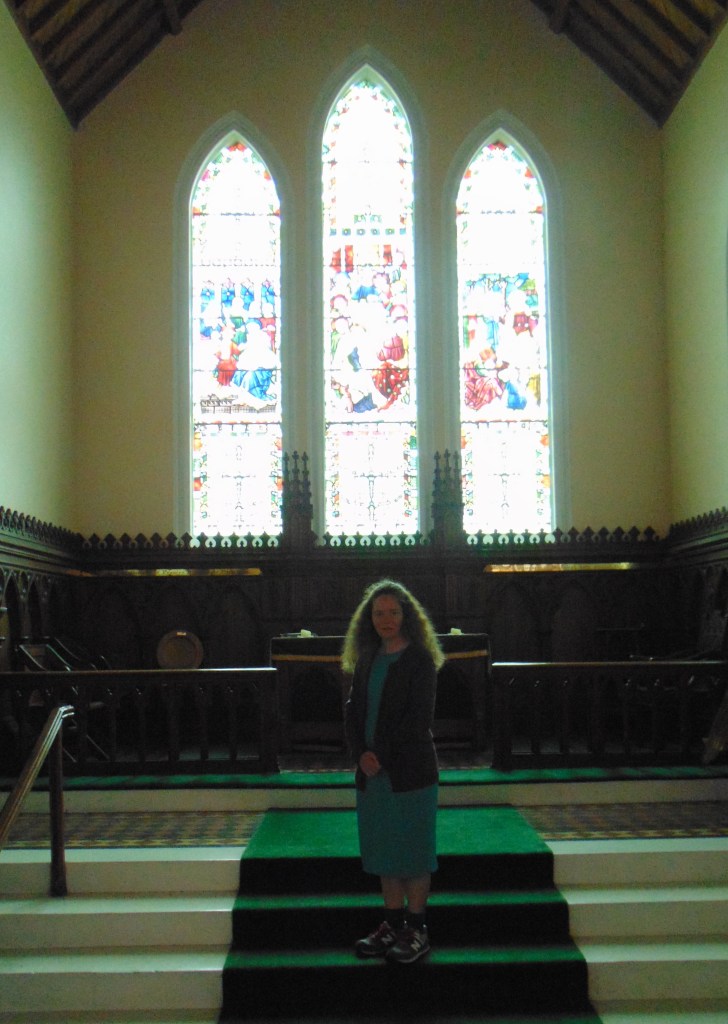
I was fortunate to visit the church in Co. Wicklow where Harriet’s father and her husband’s father served together on the parish vestry (i.e., parish council) in 1870.

In another strand of reading, my current graduate studies instructed us to choose an aspect of theology and/or church history to explore for a paper. I am reading the autobiography of one of the Church fathers, Doctor of the Church Augustine (Confessions).

So, what do the daily domestic activities of women in Colonial New England and the life of an Irish housewife who had thirteen pregnancies (ten of her children survived to adulthood) have to do with St. Augustine in the 4th and 5th centuries in North Africa?

The common thread is exploring and sharing the trajectories of our lives. In the case of Augustine, I am interested in Augustine’s “interiority” (a phrase I just came across a few weeks ago). I’ve been trying to figure out for several years how to get church people today to talk to each other in more depth about how we each experience our faith. I am reading – and writing about – Augustine and his Confessions with a goal toward figuring out how to more actively get people talking. I’m thinking that using the word interiority might help in getting people to identify what it is I want people to discuss.

I am hoping that during the next while, I will better develop ideas about getting people to talk to each other about how we experience our faith journeys.

Kim Burkhardt blogs about faith at The Hermitage Within. Thank you for reading this faith blog and for sharing it with your friends. While you are here, please feel welcome to provide support to sustain this blog ($$).
God’s love for us, Jesus’ nature, no “tortuous logic”

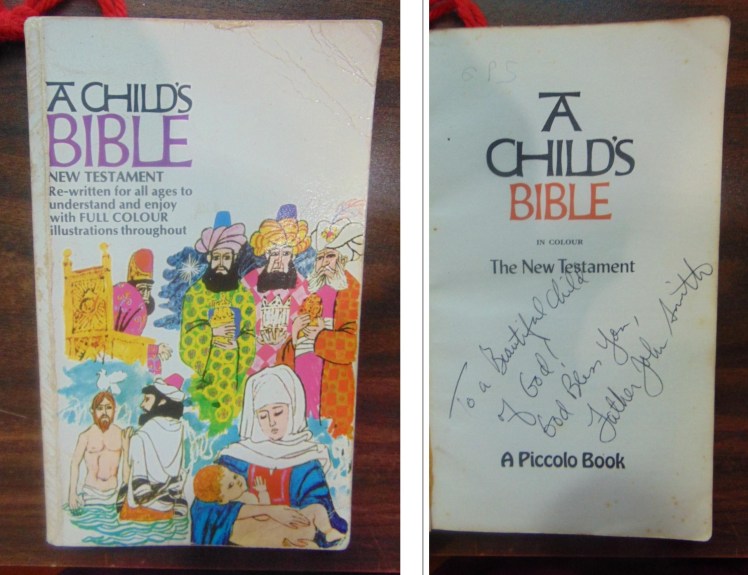
I still have my “”A Child’s Bible” that our parish priest signed for me when I was about six. As shown in the photo above, the priest wrote on the inside cover, “To a beautiful child of God! God Bless you, Father John Smith.”

Years later, I experienced a profound re-conversion experience (that story is told here) that included an extended grace-filled period of God directly loving me.

Yet, I am also a person prone to over-thinking things. I can – and sometimes do – fixate on whatever topic comes across my mind’s ticker tape (when I was a child, I had a condition called synesthesia. From the time I started learning to read, I mentally and literally saw every word I thought scroll across a ticker-tape screen that continuously rolled across the inside my forehead. I would read the ticker-tape printed-words-on-a-screen as I thought. When I would think a word that I hadn’t yet learned to spell, I would literally stop whatever I was doing to think about how to spell the word so that I could ticker-tape the word. It was so habitually part of my experience that I took it for granted).

While my synesthesia wore off when I was about ten, I can still zero in on a topic until I have worn out every conceivable way of considering the topic or until I find a satisfactory-to-me answer to a perplexing or vexing topic. The good that sometimes results is that I will stick with something until I solve it (if there’s a problem at work, give the problem to me to solve so that everyone else can move on). On the flip-side, such stick-to-it-iveness can be sometimes be unnecessary and vexing. Let it go already!

So how does all of this tie together? It comes together in a textbook I am reading for my master’s program.

I’ve always been vexed by the conundrum of Jesus’ two-fold nature. How, oh how, could one person be both divine and human? Yes, I know, God can make happen whatever he wants. With that said – says my limited human reason – either you are human or your not. Either you are God or your not. I’ve discussed this with a number of people over the years and have struggled toward finding or making peace on the matter (not arriving – so far – at the point that “faith is above reason” within Pope John Paul’s encyclical titled Fides et Ratio – the mutually compatible topics of faith and reason). “What do you mean,” I would ask, “how could Jesus have not known until he was twelve [which I’ve heard proposed] that he was the son of God? How could you be a member of the Trinity and not know it?” I also understood when I heard someone ask if Jesus – as the son of a carpenter in first-century Palestine – was illiterate. How could there even be the potentiality that a member of the Trinity – even in human form – could be all-knowing and illiterate? PAUSE THE TICKER TAPE!!!!

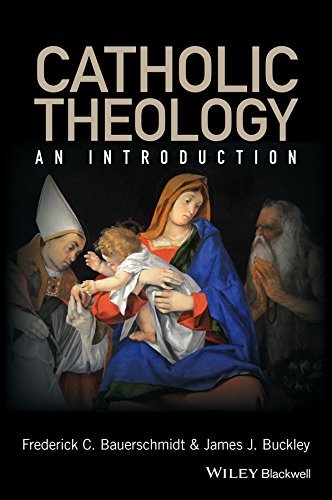
So, in my current graduate program we are reading Frederick Bauerschmidt & James J. Buckley’s book Catholic Theology: An Introduction. Chapter four of this book rolls out descriptions of centuries-upon-centuries of heated debates among theologians trying to EXPLAIN how Jesus’ divine nature and human nature could co-exist in what we now call hypostatic union within one walking-and-breathing person. Bauerschmidt’s book calls some of these theological discussions “tortuous logic.” Discussion got so thick among theologians that the topic was “on the table” at the fourth ecumenical council – The Council of Chalcedon – in the year 451. If I would have been alive then (I’m glad I wasn’t – I like electric heating, hot showers, and air conditioning) – I would have wanted to be at the Council of Chalcedon. I do occasionally read science fiction or fantasy novels that include time travel……… If you’re like me and want to do a deep dive on the various over-the-centuries ideas to explain Jesus’s two-fold nature, Catholic Theology: An Introduction can be purchased online. As for me, I’m getting toward the end of chapter four of the above-mentioned book. I might – just might – also finally getting toward the end of my own personal ticker-tape on this topic. What text is currently scrolling across my ticker-tape at the moment? The ticker-tape is currently scrolling as follows:

  • Relief and comradery – I’m not alone in having debated this topic (when I was graduating from high school, my high school had each of us take a 2 – 3 hour career aptitude test to provide any as-yet-undecided graduating students some ideas of career choices. The test results suggested I might be good as a lawyer, psychologist, or police officer. It didn’t suggest that I consider becoming a fifth-century theologian).
  • The church discarded one group’s idea that “divine and human” meant “human, with divinity floating around within Jesus like a cloud.”
  • The church has settled on the Council of Chalcedon’s explanation that Jesus had two inseparable but unmixed natures (“Hey, wait a minute,” says my ticker-tape…..”Do the arguments above still apply?”).
  • …..We – as humans – can have both a physical nature and a soul as one united person. My soul and my physical body are unmixed, but inseparable. When my soul is vexed, so is my body. Medical science these days knows about psychosomatic illness – every aspect of our self-hood medically impacts every other aspect of our self-hood. If one part of us isn’t healthy, it impacts the rest of our self-hood. ……We are body and mind, Jesus was human and divine. Maybe this will start to make sense……..

Bottom line, God loves us. I know that God loves us. For God so loved the world…… How attached am I to the rational “mental gymnastics” – tortuous logic – in all of this when there are times – Fides et Fatio – that faith is above reason rather than replacing reason? A hypostatic union made possible the ultimate sacrificial love……..

Kim Burkhardt blogs about faith at The Hermitage Within. Thank you for reading this faith blog and for sharing it with your friends. While you are here, please feel welcome to provide support to sustain this blog ($$).