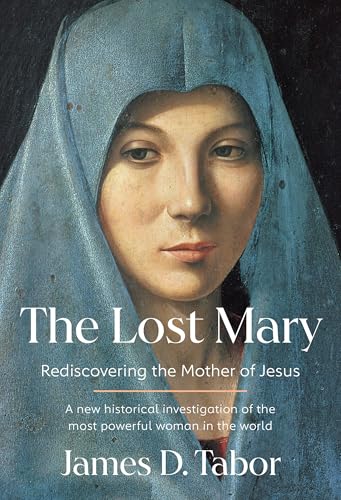
Book Review: The Lost Mary, Rediscovering the Mother of Jesus

The Lost Mary

When I happened upon a blurb about this recently-published book, I checked to see if my local library has it. I was pleased to find out they had a copy and I checked it out. In amongst my other reading, I found time to read the first few chapters of the library copy before it came due; I couldn’t renew it as other patrons have holds on the book. I’ve found The Lost Mary – Rediscovering the Mother of Jesus to be thought-provoking enough to want my own copy.

Fortunately, the timing of this book’s recent publication dovetails nicely with my master’s in theology studies. We had learned in class that much of what we know about Mary comes from “The Gospel of James (or the Protoevangelium of James).” ….. It’s widely known that there are four “canonical gospels” – the gospels of Matthew, Mark, Luke, and John that are in the Bible. In addition to the four canonical gospels, there are other gospels – some of which are “heretical” and others that are not heretical….. I learned in my studies that the “non-heretical, non-canonical” gospels are read by the church and religious scholars to provide “supplementary history” that enrich what we know from the four canonical gospels. Rabbit hole – this lead to me ordering Robert J. Miller’s book The Complete Gospels and I read “The Gospel of James (or the Protoevangelium of James).” In the Protoevangelium of James, I discovered that Mary’s parents (Joachim and Anna) were wealthy and that Joseph functioned as more of a guardian than a spouse to Mary. I was curious to learn more.

Then, I came upon James D. Tabor’s book The Lost Mary – Rediscovering the Mother of Jesus.

What I find intriguing about this book is that the author – James D. Tabor – goes beyond what we commonly know today about Mary life to consider the historical context of her life. What was it like historically for Mary to be living in Judea at the time that she lived? Tabor looks into topics – and ponders to the sociological impact on Mary’s life of what was happening at the time – the daily details of Roman conquest, a description of the town where her parents were likely living when she was born, Joseph needing to look for a Hebrew midwife when Mary went into labor, the idea that Jesus likely visited his wealthy maternal grandparents when he was a child, etc. It’s never occurred to me to ponder Jesus’ childhood visits with extended relatives and other day-to-day aspects of Jesus and Mary’s lives. Therefore, I am finding it insightful to consider the ideas presented in this book. Does writer and historian James D. Tabor accurately figure out every possible aspect of Mary’s life? Who knows. Even if Tabor goes down some tangents that may be open for debate, Tabor is raising points that broaden and enrich the reader’s understanding of the teenager who gave birth to Jesus.

I am looking forward to having my own copy of this book that I can keep on my bookshelf as a reminder that we should want to know more about the life of Mary.

Kim Burkhardt blogs about faith at The Hermitage Within. Thank you for reading this faith blog and for sharing it with your friends. While you are here, please feel welcome to provide support to sustain this blog ($$). You can also $$ support this blog by clicking here here to do your Amazon shopping (if you click here before you start your Amazon shopping, Amazon pays us a commission when you shop via the link provided).

Living the Beatitudes: Practical Ponderings

St. John the Evangelist Church, Seattle

I have been looking at the Beatitudes (or, as I recently heard, The Be-Attitudes):

Matthew 5:1-12 (the Beatitudes are also found in Luke’s Gospel)

“Now when Jesus saw the crowds, he went up on a mountainside and sat down. His disciples came to him, and he began to teach them. He said:

Blessed are the poor in spirit, for theirs is the kingdom of heaven.
Blessed are those who mourn, for they will be comforted.
Blessed are the meek, for they will inherit the earth.
Blessed are those who hunger and thirst for righteousness, for they will be filled.
Blessed are the merciful, for they will be shown mercy.
Blessed are the pure in heart, for they will see God.
Blessed are the peacemakers, for they will be called children of God.
Blessed are those who are persecuted because of righteousness, for theirs is the kingdom of heaven.

Blessed are you when people insult you, persecute you and falsely say all kinds of evil against you because of me. Rejoice and be glad, because great is your reward in heaven, for in the same way they persecuted the prophets who were before you.”

In looking at the Beatitudes, each type of “blessed” listed in the Beatitudes can be viewed as virtuous ways of contributing positively to community well-being. It would seem – at least in part – that the Beatitudes were spoken of as a way to call us toward living as Jesus wants us to live. I find myself pondering the value and/or challenges for most of us ordinary folk in living up to each of the Beatitudes. I ponder the logistics of several of the individual Beatitudes as follows:

  • Blessed are those who mourn, for they will be comforted. Why will those who mourn be comforted? Because in order to mourn, one must have loved. We are called to “love one another.”
  • Blessed are those who hunger and thirst for righteousness, for they will be filled. This is a tough one and I have a lot to sayBased upon the wording of the Beatitudes (in English, anyway), several of the other beatitudes refer to people who already have these traits – either innate or cultivated.  It is another matter to consider “Blessed are those who hunger and thirst for righteousness, for they will be filled.”   We don’t hunger or thirst for qualities we already possess.  Rather, hungering for righteousness can imply the need to become righteous.  To put it another way, it’s one thing to “hunger and thirst for righteousness” and quite another matter to undergo the emotional and spiritual refinement necessary to become righteous. One can understand that righteousness of spirit and righteousness of action position a person to bring about positivity in the world (and, the person who hungers and thirsts for righteousness has somehow come to recognize righteousness and its’ value): God would therefore consider becoming righteous to a be a worthwhile trait – and a blessing to bestow upon anyone who wants to be righteous.  In thinking about righteousness, the example of Oskar Schindler comes to mind – Israel recognized him as a “Righteous Person” following WWII. Anyone who knows the story of Oskar Schindler (for many of us, such knowledge is the result of the movie Schindler’s List) knows that finding one’s way to righteousness is not always a smooth or easy task.  Sometimes, the process of becoming righteous is daunting.  In Oskar Schindler’s case, he started out as a less-than-humanitarian industrialist and an opportunistic member of the Nazi party during WWII.   During the war, he slowly began to face the human atrocities of the Nazi regime.  Based on how he’s been depicted, I don’t know that he “hungered and thirsted for righteousness” prior to seeing the atrocities of WWII, but somehow he got around to righteousness.   In time, he made great personal sacrifice to save the lives of 1,200 Jews – earning him the later status in Israel of Righteous Person.   He became recognized as a righteous person as the result of “doing the right thing” at a great personal price.  “Doing the right thing” even when there is personal sacrifice involved, I suppose, meets the definition of being righteous. The daunting task of becoming and/or being led to righteousness (those who hunger for righteousness will be satisfied) requires that we surrender our own self-interest for doing what is for the greater good.   The spiritual crucible of refinement for becoming righteous can therefore be challenging (at least for those of us who aren’t born to naturally be like St. Therese of Liseuax) – the person willing to undergo this process is worthy of God’s attention.   Anyone who “hungers and thirsts for righteousness” may be in any pre-righteous stage of being human – ranging from saintly (or nearly so) to grumpy, irritable, or otherwise troublesome.  Yet, the person who “hungers and thirsts for righteousness” wants to be righteousness – a valued trait.  A reading of the Sermon on the Mount indicates God’s willingness to bring the willing person into a valued spiritual status.  It’s up to the person to cooperate with being led to righteousness.  I find myself pondering the emotional/spiritual crucible necessary to become righteous…..
  • Blessed are the merciful, for they will be shown mercy. Basically, treat each other the way you want to be treated and act in a way that creates kind and good communities. How well do we step out of our perspective to be kind to others? It’s often easy to be merciful to the endearing child you love who spilled their milk. However. how merciful are we to the person who rear-ends our car when we are two car payments from getting the car paid off (that happened to a friend of mine. Her eighteen-year-old daughter had just started driving and rear-ended my friend at a stop sign when her daughter was following her – totaling her car two months before it was due to be paid off)? How patient or merciful are we when a politician whose policies we disagree with makes a legitimately human mistake? How merciful are we toward the irritable relative “who has always been difficult” or the bull-headed neighbor who painted their house an awful lime green to spite a neighbor they don’t like?
  • Blessed are the pure in heart, for they will see God. For most of us ordinary mortals, it’s easy to come up with a funny punchline for this one: “Yeah, I’m pure of heart – on a bad day, I am pure $#@!#.” Jokes aside, though, I wonder if perhaps there could have been a better English translation on this one from the original Greek. Blessed are those who are purely good? Blessed are those who purely love? I’m sure this one has something to do with having a “better heart” than what I have on a bad day………
  • Blessed are the peacemakers, for they will be called children of God. I am finding a lot to consider with this one – up there with “Blessed are those who hunger and thirst for righteousness.” It’s straightforward to understand why God values peacemakers. Peacemakers work toward positive relations among God’s children. How much is required, though, to be a peacemaker? A genuine peacemaker moves beyond simply having a distaste for conflict or a passive fairy tale notion of being a pacifist. Peacemaking takes real effort. On a personal scale, we must focus not only on our own perspective and desires to really work to build understanding with the people with whom we disagree – working to build personal bridges when conflict occurs. We have to recognize when we are in the wrong and step up to fix our mistakes. Sometimes that’s easier said than done. On a national scale, peacemakers must learn about international relations and study how/why conflict occurs – and engage in bringing people together toward meaningful solutions. Again, no easy task. Blessed are the genuine peacemakers – peacemakers move beyond their own needs ty help move the world toward being a better place.

Kim Burkhardt blogs about faith at The Hermitage Within. Thank you for reading this faith blog and for sharing it with your friends. While you are here, please feel welcome to provide support to sustain this blog ($$).
The Old Testament and today’s liturgical church services……

When I was accepted into in my master’s in theology program, we were instructed to start reading Liturgy of the Hours, daily divine readings read around the world by priests, religious, and interested lay people.

This excerpt from the Book of Exodus (33:7-11) is included in this morning’s Liturgy of the Hours:

Now Moses used to take a tent and pitch it outside the camp some distance away, calling it the “tent of meeting.” Anyone inquiring of the Lord would go to the tent of meeting outside the camp. And whenever Moses went out to the tent, all the people rose and stood at the entrances to their tents, watching Moses until he entered the tent. As Moses went into the tent, the pillar of cloud would come down and stay at the entrance, while the Lord spoke with Moses. 10 Whenever the people saw the pillar of cloud standing at the entrance to the tent, they all stood and worshiped, each at the entrance to their tent. 11 The Lord would speak to Moses face to face, as one speaks to a friend. Then Moses would return to the camp, but his young aide Joshua son of Nun did not leave the tent.

For anyone familiar with modern church services, it looks to me that this passage likely contributed to the historical development of today’s church services for denominations that are liturgy-based. In liturgy-based church services, everyone stands during important points in the service.

Several years ago, a musician friend observed that important parts of a church service can be identified by watching the congregation. He observed, “Catholics stand for important points of the service, while at AME (African Methodist Episcopal) singing is done during important parts of the service” (he’s been the staff musician for both denominations at different times. He said it took awhile for him as a musician to notice this distinction).

Like my music friend, I find it interesting to observe the flow of religious services.

In the earliest days of Christianity, Christians met in homes and shared meals together – something along the lines of breaking bread together as Christ did with the apostles at “the last supper” (I am generalizing very broadly). From what I understand of church history, meeting in “churches” – public buildings – began after Constantine legalized Christianity in the Roman Empire in the early 300’s. It took time after that for the church liturgy to start looking like the church services that we recognize today. Occasional adjustments to church services continue to happen – such as switching from Latin to the local language following Vatican II.

Side note….. Has anyone else noticed the subtle change in church services that I’ve noticed following COVID? Prior to COVID, the “Catholic calisthenics” during liturgical services would include parishioners putting down the kneelers when it’s time to kneel. Often (though maybe not universally), there would then be lifting-and-lowering of the kneelers during each portion of the “calisthenics” portion of the service….. Then….when services started up again following COVID closures, I noticed that it became more common for parishioners to simply leave the kneelers “down” during the entire “calisthenics” portion of the service (i.e., leaving the kneelers down while standing and then simply returning to kneeling on kneelers that are left down). Now, it seems that increasing numbers of people are returning to “lifting and lowering” the kneelers during “calisthenics.”

Wishing everyone a fruitful Lenten season…..

Kim Burkhardt blogs about faith at The Hermitage Within. Thank you for reading this faith blog and for sharing it with your friends. While you are here, please feel welcome to provide support to sustain this blog ($$).
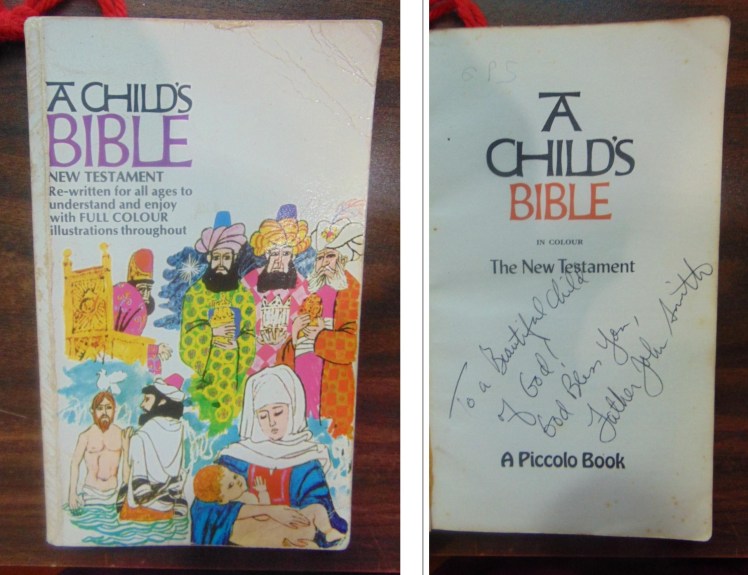
Moses and Religious Symbolism

During this first term in my master’s in theology program, we’ve been reading through the first five books of the Hebrew Bible (the Torah/Pentateuch), the four canonical gospels, and the Acts of the Apostles.

Many of us learn the religious symbolism of the Exodus. The Israelites fleeing slavery in Egypt for the freedom of the Promised Land represents spiritual transformation. On the way from Egypt to the Promised Land, the parting of the red sea symbolizes leaving slavery. Wandering for 40 years in the desert before entering the Promised Land was punishment for disobeying God. In spiritual transformation, we are freed from our personal bondage of emotional/mental/life slavery for the transformational freedom God provides us. When we don’t fully follow God today, we wander in a personal desert rather than enter the Promised Land promised via a full relationship with our God.

Beyond already being familiar with the symbolism of Exodus, I’ve been struck by learning in this week’s theological studies about how Moses’ demographics represent a multiplicity of ethnic and religious symbolism that fully allowed him to be the leader leading his fellow Hebrews out of slavery in Egypt. For example:

  • As a Hebrew adopted into Pharaoh’s royal Egyptian household by Pharaoh’s daughter and then growing up to marry a Midianite wife, Moses was in a distinct position to mediate between these varying ethnic groups.
  • As a Levite, Moses belonged to Israel’s priestly tribe. This qualified him to be Israelite’s spiritual leader. He was therefore qualified to mediate between his fellow Israelites and God [including receive the ten commandments), unite the twelve tribes (a nation-building rite of passage toward a unified Israel), and to lead his fellow Israelites out of slavery].

In the end, though, Moses himself died before the Israelites made it to the Promised Land. I find myself wondering if is representative of we humans falling short (i.e., we know that it is only God who can fully lead us to Promised Land)?

During this Lenten season, we can ask ourselves what we are doing to approach the Promised Land. How do we – individually and collectively – remain in bondage that keeps us from a full relationship with God and from being in better relationship with the people around us? How are we failing to allow God to turn us into the people that God intends for us to be? Really answering these questions and grappling with what this implies can be uncomfortable. Not answering these questions – and remaining where we are – would ultimately be more uncomfortable (and, really, irresponsible). To truly be (or to become) people of faith, we must step up and do what’s necessary to allow God to bring us to the Promised Land.

Matthew 22:34-40: Love God and love your neighbor as yourself. Anything that doesn’t measure up to loving God, loving our neighbors, and becoming the person we are truly suppose to be is going to prevent us from allowing God to bring us to the Promised Land.

Kim Burkhardt blogs about faith at The Hermitage Within. Thank you for reading this faith blog and for sharing it with your friends. While you are here, please feel welcome to provide support to sustain this blog ($$).
“Return to me,” says the Lord for I am God

Ashes

In the first reading for today’s masses – Ash Wednesday, the beginning of Lent – we hear God calling to us in Joel 2:12 – 18: “Return to me with your whole heart.”

The act of returning is not “going to a place for the first time.” The act of returning is to go back to somewhere we’ve been before.

We are being invited – as our 40 day Lenten journey – to return to the God who loves us. Returning – we are not meeting God for the first time. At some point, then, we have all experienced being loved by God. For some, that may not be a conscious memory. But, we are being invited to experience God’s loving embrace going forward.

In the Bible, periods of 40 days/years was always a time of cleansing. The Israelites were sent by God to wander in the desert for 40 years for their disobedience before being allowed to enter into the promised land. Jesus fasted and was tempted in the desert for 40 days following his baptism……

Like the periods of cleansing in Biblical days, we fast and repent – amend our ways – for 40 days of cleansing during Lent. We amend ourselves by mending our relationships – relationships with one another and with God. Surely, this must also mean getting right within our own lives. The greatest commandments – we are told – are to love God and to love one another as we love ourselves. Thus, Lent – it would therefore seem – is a time to set about making everything right.

Most of us have enough self-awareness to know areas in our lives that need to be rendered right. Therefore, what we focus on rendering right is going to be different for each of us……. How we render our lives right is going to depend upon our own particular circumstances. For one person, it might be prayer to establish a relationship with God (FYI, prayer isn’t a uni-directional conversation – it’s about a two-way relationship, like a phone call. You wouldn’t call someone, tell them something, then hang up without giving the other person an opportunity to respond. Prayer should be the same way….we communicate to God and allow God to be tangibly present to us in response). For another person, rendering our lives right might be about fixing human relationships that are strained. Or, fixing the cluttered messes in our lives (several years ago, I knew a guy who decided that Lent needed to be about going back and sorting an unfinished mess involving an ex-wife – he offered to “take the short end of the stick” to get the matter wrapped up). Getting ourselves sorted out in whatever ways are necessary….. In the end, however, the larger number of people who truly engage in repairing – repentance – during Lent…..the more we will collectively participate in bringing about some measure of the Kingdom of God in our communities today (“on earth as in heaven”)……. And…. returning to the God who loves us (while we’re at it, who can we tangibly bring some love-in-action to this Lent?).

Kim Burkhardt blogs about faith at The Hermitage Within. Thank you for reading this faith blog and for sharing it with your friends. While you are here, please feel welcome to provide support to sustain this blog ($$).

Redemption, hope, Lent…..

Trinity candles

When I had a re-conversion experience in 2016 (that story is told here), I had a profound experience of being loved by God. Love brings about hope.

More recently, in my master’s in theology program we’ve been reading through the first five books of the Hebrew Bible (the Torah/Pentateuch), the four canonical gospels, and the Acts of the Apostles. In reading the gospels of Mark and Matthew, I started getting discouraged. I thought, “Such a high degree of righteousness, self-sacrifice, etc. is required to enter the Kingdom of Heaven. I’ll never make it.” That discouragement is unnecessary, of course, because it is possible for us to do what’s presented to us – but I wasn’t seeing that. Further, I normally don’t take an interest in the future “Kingdom of Heaven” – I normally take the attitude that “Life is challenging. Forget about later – I need God now.” Then, someone changed my recent perspective yesterday – a reminder that our faith journey is meant to be done in community. We learn and apply charity in community. We learn to be faithful in community. Faith and spirituality are not a “me and God” endeavor – it’s socially about “us together in a faith community.”

What was said yesterday to change my perspective about feeling discouraged (“I’ll never make it to heaven – I’m not up for this righteousness business”)? A priest asked me about my theological studies. I told him, “We are trudging through the ‘who begat who’ in the Old Testament.'” He replied, “That’s important information, actually. You’ll notice that in Jesus’ lineage, it was mostly men who are listed in Genesis. But four of Jesus’ female ancestors are specifically listed.” That had also come up in class….. He reminded me, “All four of those women were pivotal. And, each of them did things that weren’t righteous. Jesus’ ancestors weren’t perfect – we don’t have to be either” [I forget how he worded this – something to the effect of these four women not being righteous].

All four of these women experienced some king of vulnerability. And, each of them did something unrighteous. Without them, there wouldn’t have been the historical lineage that brought us Jesus Christ.

One of the resources we’re using at school, Bible Odyssey, has this to say about these four women: “Tamar, daughter-in-law of Judah, was twice-widowed and childless. In Gen 38, she disguised herself, seduced her father-in-law, and conceived twin sons. Judah accused her of promiscuity, but ultimately even he recognized her as righteous. Rahab was a Canaanite prostitute, who was approached by Israelite spies (Josh 2, 6). By securing their safety she secured a future for herself and her family among the Israelites. Ruth was a Moabite and a childless widow (Ruth 1–4). She provided for herself and her mother-in-law by spending the night with their relative, Boaz, on the threshing floor. They married, and, with him, she carried on the family line. Bathsheba was already married when King David ordered for her to be brought to him. When she conceived David’s child, he had her husband killed and married her. Their first child died, but Bathsheba later ensured a place for herself and her family through their second son, Solomon (2 Sam 11–12; 1 Kgs 1).”

This comes back to what Christ said during his time on earth. “I didn’t come for the righteous. Those who are well don’t need a doctor. I came for sinners – the likes of the tax collectors and the prostitutes.”

Even Jesus’ ancestors did things that we wouldn’t want mentioned in the newspaper if we did those same things today. Yikes – Tamar, Rahab, Ruth, and Bathsheba (Jesus’ ancestors) didn’t just get a current events news story for their actions that would be forgotten in weeks or years. Their activities are in print for all future generations to read! Yet, we got Jesus Christ among their future descendants…..

Hmmm….. As for my earlier comment about “Forget about the future Kingdom of Heaven, I need God now.” We can have good lives today. Christ actually intends for our current social fabric – and our own lives and the lives of the people around us – to better than the difficulties that we often experience. If we truly apply the “Be-Attitudes” that we heard about in the Sunday readings a couple weeks ago, we can each contribute to a better world today.

Ash Wednesday is coming up next week. For Lent this year, I’m going to continue giving up something that I’ve recently started working to give up. I’m giving up continued frustration over a previous life difficulty that I neither caused nor had any control over. “Forgive us our trespasses as we forgive those who trespass against us.” It’s up to us to contribute to the world we want to live in. It is up to us to do “the heavy lifting.”

What are you giving up for Lent this year? In other words, what have you got to gain this year?

Kim Burkhardt blogs about faith at The Hermitage Within. Thank you for reading this faith blog and for sharing it with your friends. While you are here, please feel welcome to provide support to sustain this blog ($$).
Symbolism in the Gospel of Mark

Nature path

In my Master’s in Theology program, we are reading the Gospel of Mark this week. Mark is thought to have been the first of the four canonical gospels to have been written – probably in about year 70 (the year of the destruction of the temple). The other two synoptic gospels (i.e., similarly fashioned gospels) – Matthew and Luke – are thought to have drawn from Mark.

When I sat down this morning to read Mark’s gospel, I saw it with fresh eyes. I previously read the entire Hebrew Bible and New Testament from the first page of Genesis to the last page of Revelation, but that was well prior to having much biblical instruction. I then took a several-weeks class on Mark perhaps seven or eight years ago. Yet, I am still seeing it anew.

The first chapter of Mark – the beginning of the message of Christ in writing – leads us directly into redemptive symbolism.

Mark begins with a prophetic Hebrew Bible quote from Isaiah: “See, I am sending my messenger ahead of you, who will prepare your way, the voice of one crying out in the wilderness: ‘Prepare the way of the Lord; make his paths straight.’ so John the baptizer appeared in the wilderness, proclaiming a baptism of repentance for the forgiveness of sins. And the whole Judean region and all the people of Jerusalem were going out to him and were baptized by him in the River Jordan, confessing their sins.” (Mark 1:2-5).

So much symbolism to unpack in one short paragraph. Isaiah is part of the Old Testament; the Old Testament foreshadows the New Testament, the New Testament fulfills the Old Testament. The preparer of the way – Jesus’ cousin John the Baptist – is to be “the voice of one crying out in the wilderness” (he was literally in the physical wilderness). Symbolically, when we are not living in relationship with God we are “in the wilderness” – an emotional/psychological/spiritual wilderness…… As an aside, wilderness is still used as a literary device in literature to symbolize being in a fearful or unruly psychological state away from a well-ordered societal environment where we feel safe. Think of the Hansel and Gretel fairy tale.

Then, there is Mark 1:9-11: “In those days Jesus came from Nazareth of Galilee and was baptized by John in the Jordan. 10 And just as he was coming up out of the water, he saw the heavens torn apart and the Spirit descending like a dove upon him. 11 And a voice came from the heavens, “You are my Son, the Beloved;[h] with you I am well pleased.

The River Jordan is where the Israelites had crossed in the Old Testament from slavery in Egypt and from wandering in the wilderness for 40 years for disobeying God to enter the promised land. In baptism, we are freed from slavery and from life in the wilderness (i.e., from our confused darkness wandering) to enter into the promised land.

Immediately upon Jesus’ baptism, the Gospel of Mark writes, “And the Spirit immediately drove him out into the wilderness.  He was in the wilderness forty days, tested by Satan, and he was with the wild beasts, and the angels waited on him (Mark 1:12-13).”

Whenever we are provided God’s grace (as in baptism), Satan wishes to tempt us away from living in loving relationship with God. And, again there is the number 40. The Israelites had been sent into the wilderness (the untame place) for disobeying God, Satan tempted Jesus for 40 days. In biblical literature, a period of 40 (40 years, 40 days) is a period of purification and cleansing.

After Jesus’ 40 days in the wilderness, he began drawing people to God: “Now after John was arrested, Jesus came to Galilee proclaiming the good news of God and saying, “The time is fulfilled, and the kingdom of God has come near; repent, and believe in the good news.” (Mark 1:14-15). In subsequent passages, Jesus began healing people and driving out unclean spirits. In other words, drawing us to God and healing us.

Kim Burkhardt blogs about faith at The Hermitage Within. Thank you for reading this faith blog and for sharing it with your friends. While you are here, please feel welcome to provide support to sustain this blog ($$).

Prayers of Praise and Thanksgiving

Divine Office
Liturgy of the Hours (Divine Office)

My prayer life in recent years began with a gifted period of contemplative prayer (as told here). Hands-down, my two favorite pray-ers are the contemplative mystics Teresa of Avila and John of the Cross (I still recall being at daily mass one day when Fr. Bryan Dolejsi mentioned Teresa of Avila being a Doctor of the Church. “What?” I wanted to know, “What is a Doctor of the Church and who is Teresa of Avila?” Those questions sent me off on a follow-up inquiry for which I am grateful). I experience joy within contemplative prayer and a movement toward becoming more of the person that God wants me to be.

An additional form of prayer recently entered my daily routine when I enrolled in theological studies. We were told to start daily participation in the morning and evening prayers of Liturgy of the Hours (see my previous post about this daily set of prayers that are prayed collectively by the Universal Church).

I am still finding my way into being consistently prayerful within the set daily structure of Liturgy of the Hours. In my previous post about Liturgy of the Hours, I mentioned being told that Liturgy of the Hours is meant to be a tool for prayer than a a straight jacket dictating how we are to pray (hmm…. I thrive prayerfully within a structured mass, why I am having to find my way within the structured Liturgy of the Hours?). I discussed this recently with a priest I see once a month – he told me to find one phrase in each day’s Liturgy of the Hours that I can grab onto and basically do Lectio Divina with that one phrase……

I recently took note that Liturgy of the Hours (also called “Divine Office”) starts with us asking God to come to our assistance – followed by the Glory Be and an Alelluiah.

Hmmm….. Within contemplative prayer, I experientially appreciate God’s loving presence and appreciate that God is acting to bring about positive change within me. Basically, adoration. A relational experience and receiving. I a starting to see a new opportunity within Liturgy of the Hours – learning a new way of appreciating God via the Glory Be and an Alelluiah. Contemplative adoration is a relationship, while the Glory Be and an Alelluiah are about praising God for God’s own sake. (Life’s not “all about us!!!”). Contemplative prayer and Liturgy of the Hours are complimentary – receiving in one, praising God for God’s own sake in the other. We hear at mass that God has no need of our praise, but that our praise is itself our gift to God.

There a good many ways to praise God. There are songs of praise, a thank you during the day, and – most importantly – thanking God by being of useful service to God’s children. Living a life of faith becomes living a life of gratitude. Alleluiah!

Kim Burkhardt blogs about faith at The Hermitage Within. Thank you for reading this faith blog and for sharing it with your friends. While you are here, please feel welcome to provide support to sustain this blog ($$).
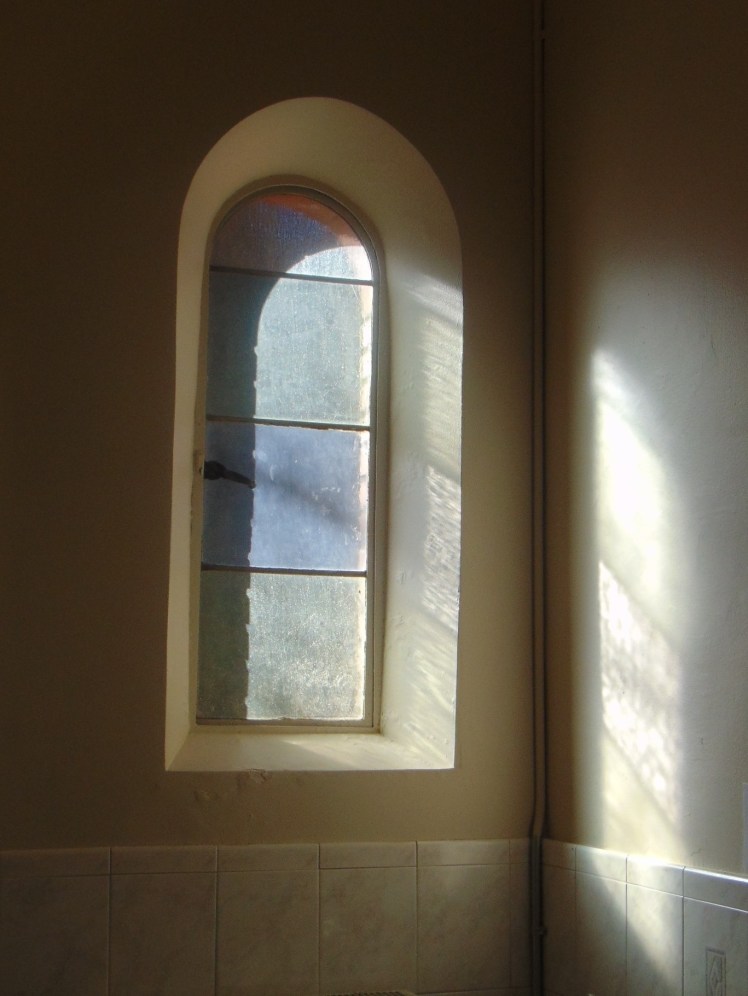
Pondering religious imagination….

Trinity of candles

I was recently given Frank J. Cunningham’s Vesper Time: The Spiritual Practice of Growing Older. Early in the book, he mentions “The Catholic Imagination.”

I am intrigued by the phrase. I happened across the phrase once before and immediately recognized that yes, there is a “Catholic Imagination.”

When I first encountered the phrase “A/The Catholic imagination,” I recalled an experience circa 2011. In 2011, I was trying to discuss a matter with a couple of non-Catholics (they were both lovely, well-meaning people). We went in circles, got nowhere. They were trying one mental and verbal approach to exploring the matter at hand, I recognized that I was clearly approaching the subject very differently. At the time, I could recognize a difference in approaches, but I couldn’t articulate the contours of either approach. When I later “happened across” the phrase “The Catholic imagination,” I instantly recognized that my involvement in the above-mentioned discussion (2011) was attempting to frame the topic via a Catholic imagination while the other two parties were employing a secular approach. Even though I was a lapsed Catholic at the time, “The Catholic Imagination” had so thoroughly infused my thinking while growing up that it stayed with me even when I was away from church.

Google’s AI effectively synthesizes several credible-source descriptions of “The Catholic imagination”: “The Catholic imagination is a worldview seeing God’s presence in the physical world, viewing earthly life, objects, and experiences as channels of grace, rooted in the belief that Jesus’s humanity makes the sacred accessible through the material. It’s a sacramental perspective, finding deeper meaning and spiritual significance in everyday things, stories, and rituals, encompassing themes of sin, redemption, and ultimate hope through a framework of divine providence and the ‘complex of opposites’ (light/dark, good/evil).”

For those who live within – and/or were raised within – a particular faith tradition, do you recognize your tradition’s “style of imagination?” Do you see that “style of imagination” infusing how you see and interact with the people and events around you? Religious imagination truly exerts a powerful influence on how we live in the world – from how we interpret meaning within events, themes, etc. to how we communicate and interact with the people in our lives. It’s easy enough to know whether or not we bring explicitly-stated religious ideas into our daily life (“I believe that God is present in my life,” “I am religiously accountable for my behavior,” etc.). It’s another matter to recognize perhaps more implicitly-incorporated ideas – a ritualized pattern of looking at daily patterns in our lives or bringing a “complex of opposites” perspective into seeing the events in our lives that might not be shared by neighbors or co-workers (good/evil, light/dark, etc.).

Hmmm…… It might be interesting to undertake psychological studies contrasting people with a particular religious imagination to to people without such a perspective. For example, is there a distinct psychological roadmap to learning life’s “shades of gray” for individuals with a “complex of opposites” worldview? Maybe such studies have already been done?

Kim Burkhardt blogs about faith at The Hermitage Within. Thank you for reading this faith blog and for sharing it with your friends. While you are here, please feel welcome to provide support to sustain this blog ($$).

Book Review: The Music of Silence

The Music of Silence
Book: The Music of Silence

I somehow keep encountering Benedictine spirituality. The first monastery I ever visited was Westminster Abbey in Mission, B.C. [I was four and had just recently been baptized. My parents decided we would visit Westminster Abbey where we attended a Latin mass ( a lot to take in for a post-Vatican II four-year-old who was still new to attending mass….)]. In 2016, I joined St. Benedict parish in Seattle. Since 2016, I have read several books on contemplative spirituality written by Benedictines. I give people copies of The Tradition of Catholic Prayer from the Benedictine St. Meinrad Monastery. I am now enrolled in a Master’s in Theology at a Benedictine university (St. Martin’s University) ….And so it goes….

Most recently, I came upon – and ordered a copy of – The Music of Silence: Entering the Sacred Space of Monastic Experience. When the book arrived, I was both surprised and not surprised that the authors are O.S.B. – of the Order of St. Benedict.

This book is proving to be everything I hoped for. Goodreads (the Internet Movie Database – IMDB – of published books) describes this book simply: The Music of Silence is “[a] collection of meditations describes the sacred nature of the monastic chant, the qualities of faith, and the peace-inducing properties of silence and listening.”

A vibrant faith life must – by definition – include both an outward life of service and an inner stillness in which we encounter God’s presence. The Music of Silence is among the written music articulating an inner environment of nurturing a personally-enriching stillness and encountering God’s presence.

Much to my gleeful surprise, this book comes with a CD of Gregorian chant (yes, I still buy and listen to CDs….). While I have occasionally listened to Gregorian chant over the years, I am now finding a richer receptivity for such chant. Perhaps my local library has CDs of Gregorian chant…..

Kim Burkhardt blogs about faith at The Hermitage Within. Thank you for reading this faith blog and for sharing it with your friends. While you are here, please feel welcome to provide support to sustain this blog ($$).