Being a person of faith: more than mental beliefs about religion
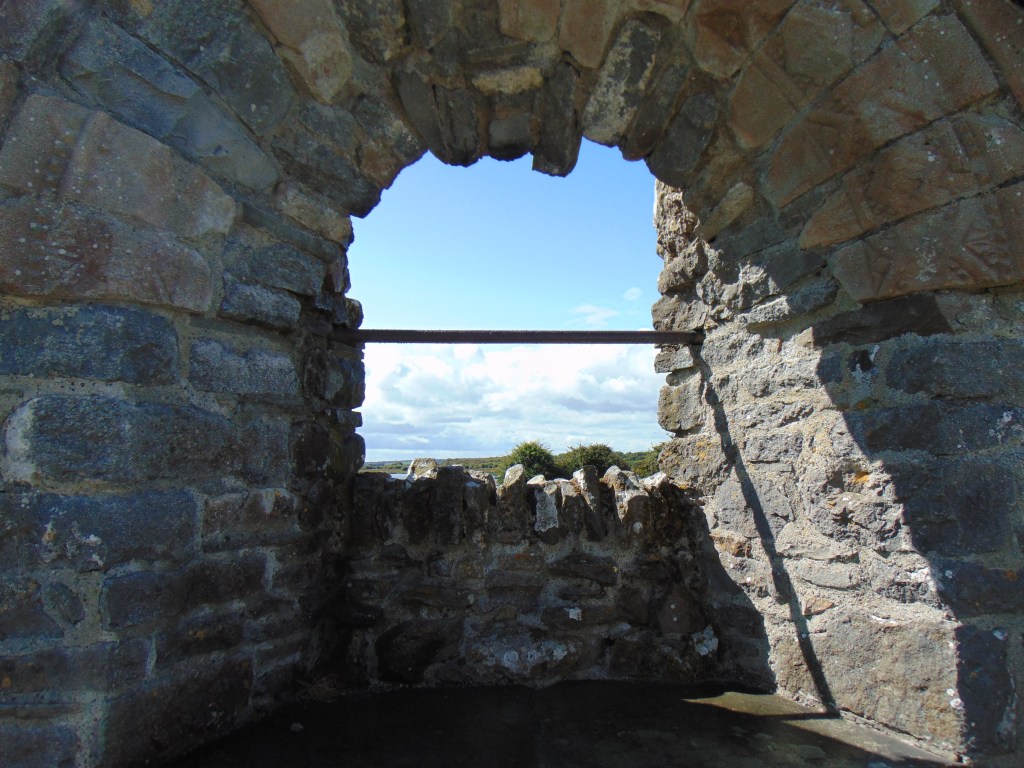
Photo: Window at Clonmacnoise Monastery, Co. Offaly, Ireland

In his book Opening to God: Lectio Divina and Life as Prayer, Irish poet David G. Benner writes “Too often faith is reduced to beliefs. But cognitive ascent to propositions has very little to do with genuine faith, which is more a posture of the heart than of the mind. Faith in God is leaning with confidence into God. (page 32)”

I spent years “trying to think my way to God.” That doesn’t work. In 2016, I had a re-conversion experience in which I felt God’s love for me; my faith moved into “a posture of the heart” that I had been trying for years to experience (my faith story is told in more detail here.).

So, how does one move from merely “reducing faith to a set of beliefs” to faith that is experienced and lived? A few thoughts:

  • Certainly, a living faith does necessitate religious learning. Who is God? Who are we in relationship to God? What are the precepts of a life of faith? Individual faith traditions provide such instruction. It is then up to us to allow these precepts to move into our being and to incorporate these precepts into our lives (i.e., incorporate these ideas into how we relate to God, relate to other people, and live our lives).
  • Faith is experiential: a relationship with God. Faith becoming experiential involves doses of grace, surrender, prayer, and love. Living faith is made possible through grace given to us by God (in the Christian tradition, this grace is conferred upon us beginning with baptism….and then grace continues to show up at other times when God knocks on our door). Our portion of “doing faith” – what David G. Benner describes as “leaning with confidence into God” – requires surrender and prayer. Surrender is an emotional giving up, ascenting to allow God to take the driver’s seat in our lives. Prayer is where we participate in a relationship with God. Rather than prayer being a uni-directional monologue of us talking at or to God, prayer is relational and interactive. In prayer, we both communicate to God and receive the presence of God (analogy: our relationships with the people in our lives are likewise interactive rather than uni-directional). I write more about prayer here. The fruits of grace, surrender, and prayer become “the fruits of the spirit” listed in Galatians 5:22-23: “”love, joy, peace, forbearance, kindness, goodness, faithfulness, gentleness and self-control.”
  • We live our faith through how we live. Growing into being a person of faith involves allowing our inner work of faith (grace, surrender, prayer, and resulting love – listed above) to direct our being-ness in the world. A life of faith is absolutely about our own relationship with God, but it is also essentially more than that – life isn’t just about us personally or about our own relationship with God. We are here to be of service to all of God’s children. Everyone is a beloved child of God, our lives are measured to the degree that we move into loving God’s children in thought and deed. Living our faith is about “love God and love your neighbor” (Matthew 22: 36-40) and applyin the precepts of one’s faith tradition (“The Golden Rule,” “Christian charity,” etc.).

Faith is more than a set of beliefs – it is how we relate to the divine and live among God’s children. Acts 17:28: “It is in God that we live and move and have our being.”

Kim Burkhardt blogs at A Parish Catechist and The Books of the Ages. If you are a new visitor, it would be great to have you follow this blog (thank you!). If you know someone who would like this blog post, please share it with them (thank you!).


Hearing God’s voice….in stillness

…….It is often in the stillness where we hear – and can respond to – the promptings of God’s voice.

In 1 Kings Chapter 19 (19:11-13), we read: “The Lord said, ‘Go out and stand on the mountain in the presence of the Lord, for the Lord is about to pass by.’ Then a great and powerful wind tore the mountains apart and shattered the rocks before the Lord, but the Lord was not in the wind. After the wind there was an earthquake, but the Lord was not in the earthquake. After the earthquake came a fire, but the Lord was not in the fire. And after the fire came a gentle whisper. When Elijah heard it, he pulled his cloak over his face and went out and stood at the mouth of the cave. Then a voice said to him, ‘What are you doing here, Elijah?’”…..

Jesus also frequently went to quiet desert spaces to pray to his father. Prayed in solitude and stillness.

For us, a relationship with God likewise requires a willingness to “go inward” – to step away from life’s hustle and bustle encouraged by our outwardly-focused society and sit in stillness. Stillness is uncomfortable for some. Pausing to go inward isn’t always comfortable – we bump up against our own inner tumult. Yet, prayer can get us through such tumult.

When we find a relationship with God – an interactive, two-way interaction rather than a one-way monologue of intercessory prayers from us directed to God (we wouldn’t relate to the people in our lives exclusively via uni-directional monologues!) – there comes a discovery that God sits with us in prayer. God’s felt presence in our lives can – and does – provide “peace that passeth all understanding.”

We also experience a relationship with God by being of service to others – by working to improve the lives of other people (Jesus told his apostles that the greatest commandments are “Love God and love your neighbor” – Matthew 22: 36-40 ). Mother Teresa lived this in the streets of Calcutta. Richard Rohr focuses on the need for both rest in God’s presence and the need to be active in the world through his Center for Action and Contemplation.

Wondering about how to go about stillness and prayer? Start praying. If you’re not praying yet, start praying twice per day for five minutes each time. Sit in stillness – go with whatever comes in that stillness and “become comfortable” with whatever comes in that stillness. Find someone with whom to discuss what you experience in stillness. Wondering how to pray, how to move deeper in prayer? Consider:

Kim Burkhardt blogs at A Parish Catechist and The Books of the Ages. If you are a new visitor, it would be great to have you follow this blog (thank you!). If you know someone who would like this blog post, please share it with them (thank you!).
Interested in the contours of your inner faith journey?

As an introvert and as one easily drawn to religious ritual, the contours of the inward journey – both my journey and the journeys of other people – have always been of interest to me. Do you also take an interest in the experience of the inner faith journey?

Some people, I hear, avoid their inner experience. The human condition inherently includes challenges – including dark corners within our individual psyches and the uncomfortable emotional debris we acquire from bumping up against life’s difficulties. Thus, some people prefer to focus outwardly so as to avoid the darkness and difficulties that lie within. Some societies encourage an outward-focused, extroverted existence.

Yet, our inner journeys are ever so remarkable and worth engaging in! Any darkness that is avoided doesn’t go away by ignoring it. One has to engage with it, sort through it, walk through it. “Wrestle one’s demons,” if you will. Engaging with one’s inner experience can lead to healing from life’s ragged edges, to a more fruitful wholeness, and to the amazing relationship with God that God wants to have with us – a journey that is very worth the trip.

A number of ponderings are offered below from writers, quotes, and books about engaging with our inward faith experience:

Treading into the Spiritual Depths: The (not depressing!) Dark Night of the Soul

Teresa of Avila and her protege John of the Cross – 16th-century Spaniards – are my two favorite mystics. In his book Dark Night of the Soul, John of the Cross writes about how the sometimes unviewable-to-us aspects of our inner faith journey are part of where God works within us to transform us (rather than this title being about a depressive view on things!). Attentiveness to our inner journey can allow us to at least a glimpse of when this (at least somewhat) unviewable aspect of our spiritual growth is being wrought within us – particularly if we have an active relationship with God in prayer (I write about such prayer here).

Gerald May’s book of the same title speaks to this idea about “The Dark Night of the Soul”: “May emphasises that the dark night is not necessarily a time of suffering and near despair, but a time of deep transition, a search for new orientation when things are clouded and full of mystery. The dark gives depth, dimension and fullness to the spiritual life.”

Is there joy in the inner experience?

Absolutely. Irish writer John O’Donohue articulates this well: “I would love to live like a river flows, carried by the surprise of its own unfolding.”

Prayer is also where we inwardly have a personal relationship with God via prayer. When such a relationship is an active one, it can be amazing and fruitful. I sometimes write about the particulars of an active prayer life; please feel welcome to read one such blog posting here.

The Inner Journey and Walking

I’m known for walking. All over town. Friends started something of a “Where’s Waldo” conversation about where they see me pop up around town (they were entertained by this conversation!). “I – or we – saw Kim walking ‘over here,’ at ‘X intersection’ or at ‘Y location….'” As a result of people knowing that I walk, a friend gave me a book called Wanderers: A history of women walking and a book by Thich Nhat Hanh called How to walk. I loved both books. Walking, as discussed by these books, is a time when some people – myself included – ponder. It turns out that a search on Goodreads for books titled “Women who walk leads to a long listing of relevant books. There is even a network called Women Who Walk.

Enjoy the inner journey!

Kim Burkhardt blogs at A Parish Catechist and The Books of the Ages. If you are a new visitor, it would be great to have you follow this blog (thank you!). If you know someone who would like this blog post, please share it with them so they can subscribe (thank you!).

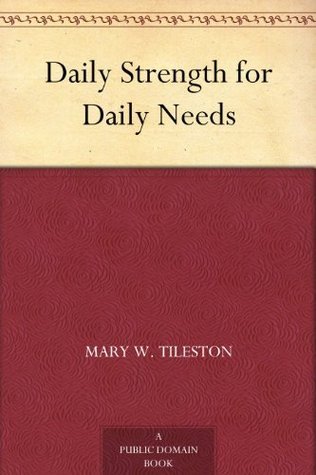
Book Review: Daily strengths for daily needs

Thank you to A Parish Catechist friend Karen Chartier for this book review. Much appreciated!

Book Review: Daily Strengths for Daily Needs

Mary W. Tileston

The Family Inspirational Library

Copyright 1928

Mary Tileston’s book Daily Strengths for Daily Needs offers a compilation of quotes from thoughtful, spiritual thinkers throughout the ages, from those found in the Bible to R.W. Emerson, to Marcus Antoninus, to George Elliot, to St. Frances de Sales — and scores of others.

Published first in 1884, it remains pertinent to the present. ‘In these days of great emotion and radical changes, we need the steady, persistent and refreshing inspiration of spiritual thoughts, which, entering the texture of our life in the morning, will guide and refresh us through the day, or, in the evening, give a sense of confidence and peace.’ opens the preface, and both the need and the outcomes outlined are relevant.

I was given this book by a friend and have been inspired by it throughout the year. I highly recommend it. Below are examples of quotes of Tileson’s book.

The one who will be found in trial capable of great acts of love, is ever the one who is always doing considerate small ones.          F. W. Robertson

A man is relieved and gay when he has put his heart into his work and done his best; but what he has said or done otherwise, shall give him no peace.                   R. W. Emerson

We may, if we choose, make the worst of one another.  Everyone has his weak points; everyone has his faults; we may make the worst of these; we may fix our attention constantly upon these.  But we may also make the best of one another.  We may forgive, even as we hope to be forgiven…By loving whatever is loveable in those around us, love will flow back from them to us, and life will become a pleasure instead of a pain; and earth will become like heaven; and we shall become not unworthy followers of Him whose name is Love.                      A. P. Stanley

Book Reviewer: Karen Chartier

Day of Solemnity: Recognizing John the Baptist’s birth

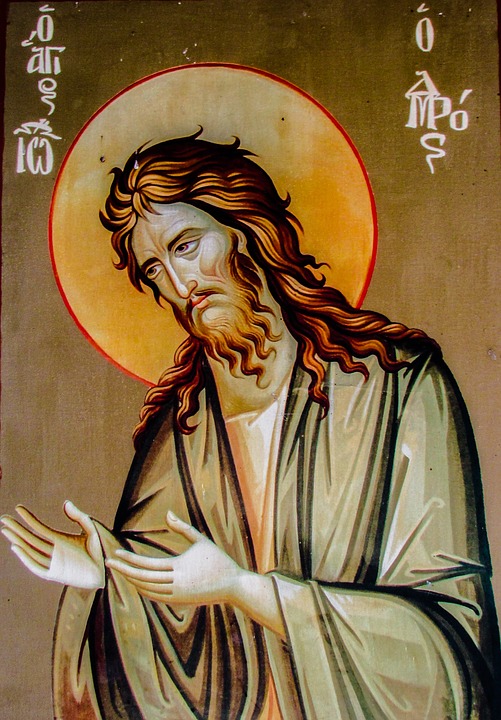
Today we recognize the birth of John the Baptist.

John the Baptist was born six months before Jesus. While we don’t know their exact dates of birth, it makes sense chronologically that we celebrate John the Baptist’s birthday six months ahead of the day we celebrate Jesus’s birth.

This day of solemnity – June 24 – comes three days after the start of summer. The first day of summer is the longest day of the year, after which days begin to get shorter.

Likewise, we celebrate Jesus’s birthday – December 25 – four days after the darkest day of the year, when the darkest days of the year are beginning to get lighter. Metaphorically, Jesus is bringing light into the world.

Just as we recognize Jesus as bringing light into the world, we look at the current seasonal calendar and see another metaphor correlated to celebrating the birth of John the Baptist. Days are now getting shorter; we look to 3:30 in the fourth gospel: “He must become greater, I must become less.” In other words…..Just as John the Baptist recognized Jesus as greater than himself (“I am not worthy to untie his sandals”), we look at today’s days getting shorter as symbolically representing that we must reduce ourselves (we are less important) as we give Jesus a greater place in our lives.

Kim Burkhardt blogs at A Parish Catechist and The Books of the Ages.

* Royalty paid for use of image.