Book Review: Opening to God (David G. Benner)

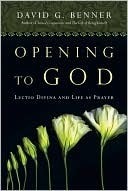
I was hooked when I read the back cover of David Benner’s Opening to God: Lectio Divina and Life as Prayer.

I read these excerpts from the book’s back cover as poetry describing the best I have experienced in prayer: “Prayer is not just communication with God: it is communion with God. As we open ourselves to him, God does the spiritual work of transformation in us…….discover openness to God as the essence of prayer…..Move beyond words [in prayer] to become not merely someone who prays, but someone whose entire life is prayer in union with God.”

Okay, I haven’t yet gotten to living as “someone whose entire life is prayer,” but my prayer life has joyously moved beyond “words communicated to God” to prayer being a relationship – without the need for human language” (as I mention in several previous blog posts such as this one). In my case, such prayer was given to me as a grace.

I started reading this book last night. Happily, the book is living up to the book’s description – a descriptive book about the dynamics of prayer being a meaningful relationship with God. A worthwhile read about what prayer can be and is meant to be.

Kim Burkhardt blogs at A Parish Catechist and The Books of the Ages. If you are a new visitor, it would be great to have you follow this blog (thank you!). If you know someone who would like this blog post, please share it with them so they can subscribe (thank you!).

Interested in the contours of your inner faith journey?

As an introvert and as one easily drawn to religious ritual, the contours of the inward journey – both my journey and the journeys of other people – have always been of interest to me. Do you also take an interest in the experience of the inner faith journey?

Some people, I hear, avoid their inner experience. The human condition inherently includes challenges – including dark corners within our individual psyches and the uncomfortable emotional debris we acquire from bumping up against life’s difficulties. Thus, some people prefer to focus outwardly so as to avoid the darkness and difficulties that lie within. Some societies encourage an outward-focused, extroverted existence.

Yet, our inner journeys are ever so remarkable and worth engaging in! Any darkness that is avoided doesn’t go away by ignoring it. One has to engage with it, sort through it, walk through it. “Wrestle one’s demons,” if you will. Engaging with one’s inner experience can lead to healing from life’s ragged edges, to a more fruitful wholeness, and to the amazing relationship with God that God wants to have with us – a journey that is very worth the trip.

A number of ponderings are offered below from writers, quotes, and books about engaging with our inward faith experience:

Treading into the Spiritual Depths: The (not depressing!) Dark Night of the Soul

Teresa of Avila and her protege John of the Cross – 16th-century Spaniards – are my two favorite mystics. In his book Dark Night of the Soul, John of the Cross writes about how the sometimes unviewable-to-us aspects of our inner faith journey are part of where God works within us to transform us (rather than this title being about a depressive view on things!). Attentiveness to our inner journey can allow us to at least a glimpse of when this (at least somewhat) unviewable aspect of our spiritual growth is being wrought within us – particularly if we have an active relationship with God in prayer (I write about such prayer here).

Gerald May’s book of the same title speaks to this idea about “The Dark Night of the Soul”: “May emphasises that the dark night is not necessarily a time of suffering and near despair, but a time of deep transition, a search for new orientation when things are clouded and full of mystery. The dark gives depth, dimension and fullness to the spiritual life.”

Is there joy in the inner experience?

Absolutely. Irish writer John O’Donohue articulates this well: “I would love to live like a river flows, carried by the surprise of its own unfolding.”

Prayer is also where we inwardly have a personal relationship with God via prayer. When such a relationship is an active one, it can be amazing and fruitful. I sometimes write about the particulars of an active prayer life; please feel welcome to read one such blog posting here.

The Inner Journey and Walking

I’m known for walking. All over town. Friends started something of a “Where’s Waldo” conversation about where they see me pop up around town (they were entertained by this conversation!). “I – or we – saw Kim walking ‘over here,’ at ‘X intersection’ or at ‘Y location….'” As a result of people knowing that I walk, a friend gave me a book called Wanderers: A history of women walking and a book by Thich Nhat Hanh called How to walk. I loved both books. Walking, as discussed by these books, is a time when some people – myself included – ponder. It turns out that a search on Goodreads for books titled “Women who walk leads to a long listing of relevant books. There is even a network called Women Who Walk.

Enjoy the inner journey!

Kim Burkhardt blogs at A Parish Catechist and The Books of the Ages. If you are a new visitor, it would be great to have you follow this blog (thank you!). If you know someone who would like this blog post, please share it with them so they can subscribe (thank you!).

Engaging faith tradition’s meaning via religious symbolism

I was in high school when I realized that my prayer life needed to move beyond communicating to a God sitting on a literal physical throne located high in the skies above. Growing in faith requires, at some point, learning to think beyond the literal (i.e., “The Garden of Eden story was literally about an apple and a snake”).

It took me several years longer to reach another stage of faith maturity: to begin grasping faith lessons with more of the breadth and meaning that religious symbolism is meant to impart. (The academic and theologian James Fowler did groundbreaking work on how we understand and navigate faith throughout our life stages in his book Stages of Faith).

Encyclopedia Britannica states that in religious symbolism, “The symbol object, picture, sign, word, and gesture require the association of certain conscious ideas in order to fully express what is meant by them. To this extent it has both an esoteric and an exoteric, or a veiling and a revealing, function” (the parables that Jesus told also had both revealing and veiling purposes).

Faith becomes more multifaceted when conceptualizing faith at this more varied level. Examples of recognizing the meaning of religious symbolism include:

  • There’s the apple and the snake (Garden of Eden)….. Adam and Eve were provided a terrestrial paradise with the condition that a life of terrestial paradise be contingent upon living as instructed by God; Adam and Eve violated the covenant given to them by God, thereby bringing sin and unhappiness into the world. Following God’s instructions would have allowed for the human happiness that God intended for us; we have free will, God can’t force us to live in right relationship with God. The lesson for us is that happiness for humanity as a whole and for us as individuals is contingent upon living in right relationship with God – something that we, in our broken state, have to work toward (and, we are dependent upon God’s grace). The message of us following God’s will is more important than the apple and snake in the Garden of Eden….
  • Robert Barron states in his book Catholicism A Journey to the Heart of the Faith that “One of the typical biblical names for the devil is ho diabalos, derived from the term diabalein (to throw apart). If God is a great gathering force, then sin is a scattering power.” God brings us together in love and unity, the devil divides us (I heard the bishop of the U.S. Episcopalian Church, Michael Curry, indicate that sin is based in selfishness). In referencing a passage about historical Israel, Fr. Brandon discusses that “Ever since humanity’s first parents fell out of paradise, that is, broke their relationship with God, God has been hard at work trying to mend that brokenness…..God’s intention was that a unified and spiritually vibrant Israel would function as a magnet for the rest of humanity, drawing everyone to God by the sheer attractive quality of their way of being.”

Coming to recognizing the meaning intended by religious symbolism involves maturing attentiveness to what is communicated in one’s faith tradition. Surrendering to the process provided by one’s faith tradition helps to incorporate the meaning provided by religious symbolism into one’s life.

Which religious symbolism – and its’ meaning – is providing meaning in your life?

Kim Burkhardt blogs at A Parish Catechist and The Books of the Ages. If you are a new visitor, it would be great to have you follow this blog (thank you!). If you know someone who would like this blog post, please share it with them (thank you!).

List: Ways of connecting your daily life to the sacred

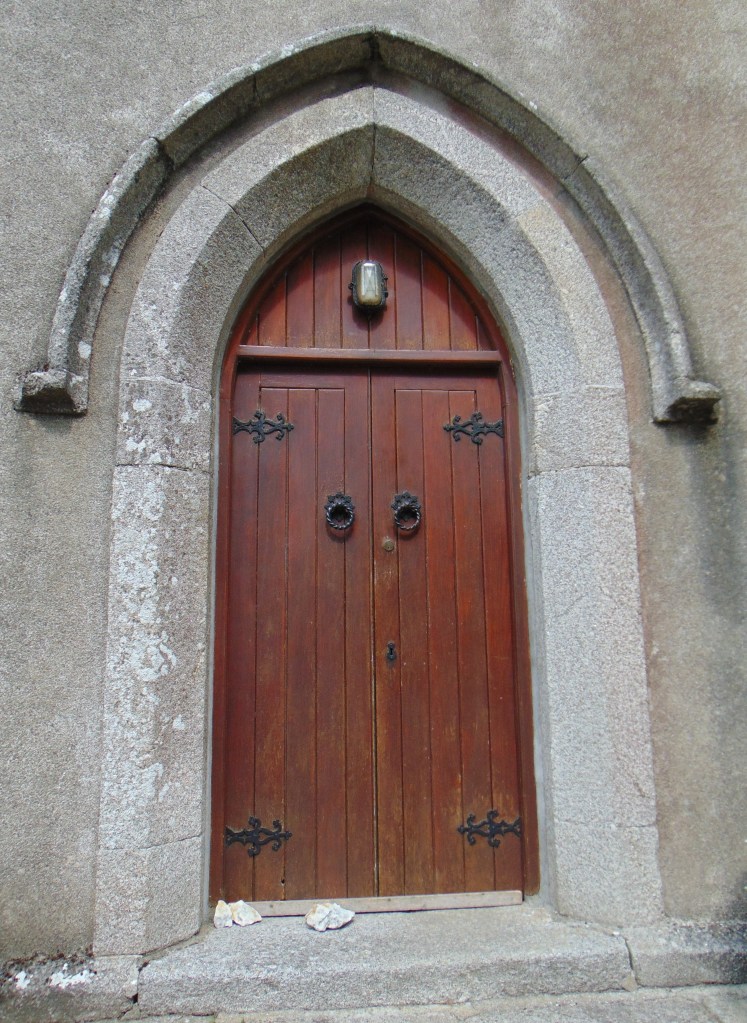
St. Fiaac’s Church, Co. Wicklow, Ireland

I recently came across the phrase “Doors to the Sacred” (in reference to sacraments – baptism, etc.). A beautiful phrase!

How do you connect to the sacred?

Here are ways that I connect to the sacred in daily life. Perhaps these will provide you with ideas for connecting to the sacred each day!

  • Prayer

I regularly and actively engage with an encounter with God through prayer. God wants to have a relationship with us; prayer is how we cultivate a personal relationship with God. My preferred form of prayer is contemplative prayer (more on types of prayer here). Personally, my most fruitful prayer time used to be before going to sleep (though I pray several times per day!). More recently, the morning is becoming my most comfortable time to pray. The how and when of meaningful prayer varies for each person!

  • Building up other people, treating people with dignity

The two greatest commandments are “love God” and “love your neighbor” (Matthew 22:36-40). Therefore, being good to God’s children is a sacred activity (we are all God’s children!). Building up other people is good for them and good for me. Lately, I have been building up other people by complimenting complete strangers (“Your hairstyle is great!” “That was a super thing you just did!”). Often, complimenting strangers results in them smiling! Treating people with dignity contributes toward making the world a better place. Everyone is fighting some kind of personal battle; treating everyone with dignity helps lighten their load!

  • Becoming the person God wants me to be

We are all beloved children of God, God wants us to be happy. God knows how I could become the person I am meant to be. Starting in 2016, I came back around – in prayer – to letting God change me. I tried that once before (starting in my teens), I am experiencing more “fruits of the spirit” this time around (Galatians 5:22-23).

  • Emotionally engaging when I attend church (I attend regularly)

Faith is a verb. Church is meant to be participated in, a time when we encounter God in community.

  • Getting to church via the same route every time I attend (Sunday services and weekday services)

For me, church services don’t start when I arrive at church. When I get up on Sunday morning, I don’t turn on the news or connect with other distractions. I get up thinking about church. I then routinely take the same route to get to the church; as I make my way there, I ponder the experience of church – who’s going to be there, is today a special religious feast day, etc. By the time I arrive at the church, I am reflectively “in full church mode,” ready to “take in” the service.

  • Daily reading of faith-related books

I am always reading a book on faith. Many people who read have routines of when they read. For me, I tend to read faith-related books in the evening before going to sleep.

  • Religious items on display at home

I keep religious items on display at home. For example, I have a bookshelf where I display denomination-specific church items (everything from prayer beads to candles). In addition, I keep memorabilia around – such as a photo of the church door at St. Fiaac’s Church in Co. Wicklow, Ireland where my great-grandfather was baptized; that’s the photo I used at the beginning of this post (I took the photo when I visited the church several years ago).

Kim Burkhardt blogs at A Parish Catechist and The Books of the Ages. If you are a new visitor, it would be great to have you follow this blog (thank you!). If you know someone who would like this blog post, please share it with them (thank you!)

Day of Solemnity: Recognizing John the Baptist’s birth

Today we recognize the birth of John the Baptist.

John the Baptist was born six months before Jesus. While we don’t know their exact dates of birth, it makes sense chronologically that we celebrate John the Baptist’s birthday six months ahead of the day we celebrate Jesus’s birth.

This day of solemnity – June 24 – comes three days after the start of summer. The first day of summer is the longest day of the year, after which days begin to get shorter.

Likewise, we celebrate Jesus’s birthday – December 25 – four days after the darkest day of the year, when the darkest days of the year are beginning to get lighter. Metaphorically, Jesus is bringing light into the world.

Just as we recognize Jesus as bringing light into the world, we look at the current seasonal calendar and see another metaphor correlated to celebrating the birth of John the Baptist. Days are now getting shorter; we look to 3:30 in the fourth gospel: “He must become greater, I must become less.” In other words…..Just as John the Baptist recognized Jesus as greater than himself (“I am not worthy to untie his sandals”), we look at today’s days getting shorter as symbolically representing that we must reduce ourselves (we are less important) as we give Jesus a greater place in our lives.

Kim Burkhardt blogs at A Parish Catechist and The Books of the Ages.

* Royalty paid for use of image.

Book Review: Stages of Faith (spoiler – a useful read!)

I have found this book to be a tremendous value in my own faith journey specifically and in my overall psychological development generally.

When I returned to church in 2016 – after a 20-year hiatus – the pastor with whom I connected listened to my story about my experience with church and he made a comment about my “stage of faith.” He rather suggested that my “stage of faith” was younger than my chronological age of maturity. Ouch! But, okay, was he perhaps correct? I took an interest in his turn of phrase, “stage of faith.” I Googled the phrase, found my way to this book by academic-sociologist-theologian James Fowler (in later conversations, I found out that the pastor had read this book).

Fowler had interviewed hundreds of people – from young children to seniors – to hear about how their experience faith and a search for meaning within a western context. Fowler drew from these interviews and from existing theories of psychological development to profile six descriptive/normative stages of faith development. Most people, it turns out, grow to somewhere between stages three and five….. I looked for myself in this book; discovered – in re-reading parts of the book several times – that my “stage of faith” was pretty close to where the pastor had guessed I was at – I had gotten stuck in the transition between stages three and four (a common place to get developmentally detoured, according to James Fowler).

When I read this book, I had known for some time that I had been “stuck” in my effort to grow further in faith; I wasn’t sure how to get “unstuck.” This book provided tremendous value in this regard. Once I identified “where I was” (i.e., 3.5), I re-read the next stage – stage four – to get an idea of where to head next. Once I saw a roadmap of the direction to head in (without this book being tied to a particular denomination), this helped me to begin moving forward, thankfully (the particulars of moving forward are guided by my denomination, as are each of us).

In addition to finding faith assistance from this book, I found in this book that various aspects of my faith-mental-emotional “developmental stages” weren’t entirely lined up in one neat age-chronology phase. Life wasn’t “tidy.” This book helped me to grow and mature various aspects of my self-hood to get my “various aspects” closer to one chronological age. I come back to this book occasionally to monitor my ongoing progress…. On the whole, a worthwhile read that I often recommend to people I meet.

Since I read this book, I have also sought-out and found additional topic-relevant books for follow up. For example, Jane Regan’s book Toward an Adult Church is a worthwhile read.

Kim Burkhardt blogs at A Parish Catechist and The Books of the Ages.

Another “church as a field hospital” week….

I wrote recently about being drawn to Pope Francis’s idea that church is a “field hospital” for the needs of humanity (see previous post).

There are times when I feel this in my own life. This week, I again needed the “field hospital” services of church – life’s hard knocks taking their toll. This time, as sometimes is the case, it’s self-inflicted challenges for which I need an emotional “field hospital.”

It’s always uncomfortable when we create our own difficulties.

Coming out of these times, though, it truly is heartening when God heals our hearts and prepares us better for life. This DOES require that we let God work within us (free will). In recent years, I have observed the inner work of God re-arranging my inner life so as to be on a better footing in life. Healthier, more functional – with a more mature place in the world than I would arrive at on my own. Christ came “that we might have life, and have it more abundantly” (John 10:10).

Kim Burkhardt blogs at A Parish Catechist and The Books of the Ages.

Teresa of Avila (autobiography): book review, reflection

It must have been 2017 where I first heard of Teresa of Avila. Fr. Bryan Dolejsi mentioned her one weekday at St. Benedict parish (Seattle), calling her a “Doctor of the Church.” “What,” I wondered, “is a Doctor of the Church….and there is a woman recognized as a Doctor of the Church? I must find out who she is!” That led me to a Seattle Public Library copy of Mirabai Starr‘s English translation of the autobiography of this 16th century Spanish mystic.

Now, my own dog-eared and frequently-consulted copy of this book is on my bookshelf. Inside the front cover is a photograph of me with the translator, Mirabai Starr, at her speaking engagement at St. Mark’s Cathedral (Episcopal) in Seattle (yes, Mirabai graciously autographed my copy of the book).

Teresa of Avila’s autobiography – her life, her mystical, contemplative experience – has actively nourished my own prayer life. When I returned to church in 2016, it was a result of a “God moment” (including a broken ankle, long story) in which God gifted me an unanticipated and emotionally nourishing period of contemplative prayer. I didn’t have the vocabulary to talk about the inner state I was experiencing (now, I know to call that period of time “an encounter with God”); Teresa’s autobiography provided me with exquisite articulation about mystical prayer. Since finding and eagerly re-reading this book over time, I’ve heard people refer to the writings of Teresa and her protege (John of the Cross) as poetry-about-prayer. I don’t feel that a “poetry” description gives justice to their writing (accurate perhaps, but the description pales); I prefer to think of the writing of these two Carmelite saints as “the voice of lived experience.”

Kim Burkhardt blogs at A Parish Catechist and The Books of the Ages.

Feeling blue? Anxious? How do you pray?

For many of us, we first conceptualize prayer as mentally talking to God. Mentally speaking in sentences, much like we would talk to a person. Telling God what we want to say, submitting prayer requests (intercessions, our “wish list”), hoping for “an answer.”

Such prayer is certainly one way to initiate a prayer life.

There are many more ways to pray. Prayer is meant to be communication, a relationship. An analogy I heard – and like – compares prayer to a phone call. We wouldn’t just call a person we know, tell them what we want to say, then hang up as if communication were complete. Such phone calls wouldn’t help us sustain relationships with the people in our lives. That approach to prayer wouldn’t produce a full prayer life, either. Communication is relational. Prayer is relational.

God hungers to have a relationship with us – more than “one way phone calls” from us.

God hungers to be present in our lives, to transform our lives. God hungers to share love with us in a relational way in which we feel and experience God’s love for us. In order for this to happen, we need to participate in a two-way relationship with God. Prayer can be a truly interactive, relational activity in which we allow God to transform our lives. More than just a one-way phone call.

There are a myriad of ways pray. Several ways to pray include:

  • Attending church is prayer
  • Rote prayer, prayers of the liturgy: Lord’s Prayer, etc.
  • Psalms (they are always sung!)
  • Lectio Divina (reading faith books reflectively to take in the book’s meaning prayerfully)
  • Talking to God the way we would talk to a person
  • Contemplative Prayer (resting in God’s presence – sitting with God)

Personally, contemplative prayer is the type of prayer I find most meaningful – relationship-building. I have largely given up any “human language” in prayer (except for when I specifically do intercessory prayer); rather, my prayer life mostly consists of “resting in God’s presence.” I’m fortunate – I responded in 2016 to a “nudging of the Holy Spirit” in which I was gifted with a sustained period of feeling God’s presence in prayer. It was a life-transforming period of time; I found my way to Contemplative Outreach Northwest and now I talk to people about the power of God our lives. At present, my morning prayer consists of reflecting on the Anastasis icon above – an iconographic representation of the Harrowing of Hell; the Harrowing of Hell was Christ’s descent into Hell (between his death and resurrection) to free Adam and Eve from the result of The Fall. This particular version of Anastastis iconography is located in the chapel at St. Andrew’s Episcopal parish in Seattle, Washington. I find Anastasis to be a powerful depiction of God’s desire to free us, to transform us. God wants us to experience God’s love for us.

If prayer is unfamiliar to you or “less than what you’d like it to be,” consider taking on “prayer homework.” Pray twice per day for five minutes each time. Try out the various types of prayer listed above to find a style of prayer that you find to be of value. If you’d like to learn more about several types of prayer, my favorite book describing multiple types of prayer can be found here.

“Be still and know that I am God.”   Psalm 46:10

Kim Burkhardt’s blog can be found at A Parish Catechist.